
If you are trying to conceive, every pinch or twinge in your lower abdomen feels like it could be “the one.” I see many women in my clinic who are confused by the timing of their symptoms. To give you the bottom line immediately: No, cramping during the actual act of ovulation does not mean you are pregnant yet.
Pregnancy is a biological process that takes time. Ovulation is simply the first step—the release of a mature egg from your ovary. For pregnancy to happen, that egg must be fertilized by sperm in the fallopian tube and then travel down to the uterus to attach to the lining. This attachment, called implantation, doesn’t happen for another 6 to 12 days. Therefore, if you are feeling sharp pains exactly when your LH levels peak, you are likely feeling your body’s signal that you are at your most fertile, not that a pregnancy has already begun.
At PregnancyClarity, we aim to help you decode these signals so you aren’t left guessing. Understanding the difference between “fertility pain” and “pregnancy pain” is the first step in managing the emotional rollercoaster of the two-week wait.
Understanding Ovulation Pain vs. Early Pregnancy Signs
It is easy to get these two confused because they often happen in the same general area of the pelvis. However, the biology behind them is quite different.
What is Mittelschmerz? Why your body cramps during ovulation.
“Mittelschmerz” is a German word that literally means “middle pain.” About 20% of women experience this discomfort halfway through their menstrual cycle. As a doctor, I explain it as a localized, one-sided pain.
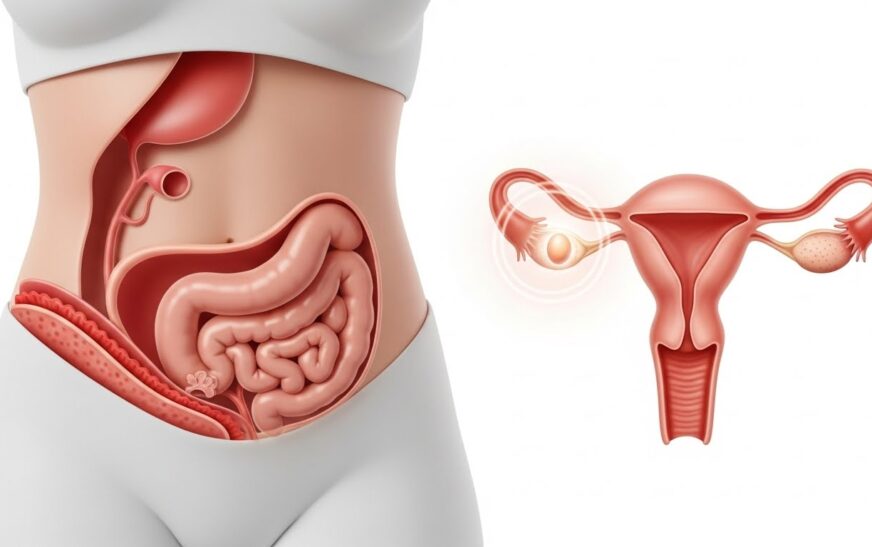
There are two main reasons for this. First, just before the egg is released, the follicle on the surface of the ovary grows rapidly and stretches the ovarian wall. Second, when the egg finally bursts out, a small amount of fluid or blood is released along with it. This fluid can irritate the lining of your abdomen, causing a dull ache or a sharp twinge that can last from a few minutes to a couple of days.
The biological timeline: Can you be pregnant while ovulating?
Biologically, it is impossible to be pregnant at the moment of ovulation. Think of ovulation as the “opening of the door.” Pregnancy can only happen after the “guest” (the sperm) arrives and the “settling in” (implantation) occurs.
If you feel cramps today and your ovulation test shows a dark line, your body is telling you that now is the time to try. If you conceive during this window, you won’t actually “be” pregnant in a way your body can detect until about a week later. If you are feeling early symptoms and aren’t sure where you are in your cycle, it helps to know how soon can you take a pregnancy test so you don’t test too early and get a frustrating negative result.
Cramping After Ovulation: Is It a Sign of Pregnancy?
Once the egg has left the building, your body enters a new phase. This is where the confusion really starts, because the hormones produced after ovulation are the same ones that support early pregnancy.
The “Two-Week Wait”: What happens after the egg is released.
After the egg is released, the empty follicle transforms into something called the corpus luteum. This tiny temporary gland starts pumping out progesterone. Progesterone is a wonderful hormone, but it’s a bit of a trickster. It causes your uterine lining to thicken and your body temperature to rise, but it also causes bloating, breast tenderness, and, you guessed it, mild cramping.
Even if you aren’t pregnant, your progesterone levels will rise during this time. This is why many women feel “pregnant” every single month, even when they aren’t. Your body is essentially preparing for a baby every time you ovulate, regardless of whether fertilization happened.
Implantation vs. Ovulation Cramps: Key differences in sensation and timing.
If fertilization did occur, the next major event is implantation. This usually happens 7 to 10 days after ovulation. Unlike ovulation cramps, which are usually on one side, implantation cramps are often felt in the center of the pelvis, right in the uterus.
These cramps are typically very mild, more like a light tugging or tingling sensation rather than the sharp “poke” of ovulation. Some women also notice a tiny bit of light spotting during this time. If you notice this, you might be curious abouthow soon after implantation can I test. Usually, you need to wait 2 or 3 days after that pulling sensation for the pregnancy hormone (hCG) to be strong enough to show up on a home test.
Comparing Ovulation Cramps vs. Pregnancy Cramps
As someone who has talked to thousands of women about their cycles, I’ve found that a few specific details can help you tell these two apart.
Timing and Duration: How long do they last?
- Ovulation Cramps: These are very predictable. They happen mid-cycle (around day 14 for a 28-day cycle) and usually disappear within 24 to 48 hours.
- Early Pregnancy Cramps: These start later, closer to when your period is expected. They may come and go for several days as the uterus begins to expand and change.
Location and Intensity: Dull aches vs. sharp pinches.
I often tell my patients to pay attention to “the map” of their pain. Ovulation pain is almost always off-center because you usually only release one egg from one side. Pregnancy cramping, however, involves the whole uterus. It feels more like a heavy fullness or a mild version of your period cramps.
Associated Symptoms: Tracking cervical mucus and spotting.
During ovulation, your body produces “egg white” cervical mucus, clear, stretchy, and slippery. This is a sign of high estrogen. After ovulation, that mucus disappears and becomes thick or dry. If you are pregnant, you might eventually notice an increase in thin, milky white discharge (leukorrhea), but this usually shows up a bit later than the initial cramps.
If you see a bit of blood with your cramps, don’t panic. While it can be scary, it’s often just your body reacting to hormonal shifts. It’s helpful to learn exactly how much bleeding is normal in early pregnancy so you can stay calm and know when to call your doctor.
Continuing where we left off, I want to address the specific questions I see most often in forums and during patient consultations. Understanding these nuances helps reduce the anxiety that often comes with the “two-week wait.”
Common Questions from the Community (Reddit & Forums)
When you are scrolling through threads on Reddit or health forums, it is easy to find conflicting information. Many women ask very specific questions about the timing of their cramps. Here is the medical reality behind those common queries.
Can you have cramps a week after ovulation and be pregnant?
Yes, this is actually one of the most common times for pregnancy-related cramping to start. If you are exactly 7 to 10 days past ovulation (DPO), you are in the prime window for implantation. This is when the fertilized egg (now called a blastocyst) burrow into the uterine lining. This can cause mild, period-like sensations. If you feel this, it is a good time to start tracking other symptoms like breast tenderness or a missed period.
Is mild cramping after ovulation a “good sign”?
While it can be a sign of a successful conception, it isn’t a guarantee. In my years of practice, I have seen patients with significant cramping who were not pregnant, and others with no symptoms at all who were. Mild cramping after ovulation is often just the result of high progesterone levels. Progesterone relaxes smooth muscles throughout the body, including your bowels, which can lead to gas and bloating that feels like uterine cramps.
Does cramping during ovulation change after you’ve had a previous pregnancy?
Many women notice that they become more “attuned” to their bodies after having a baby. You might feel ovulation more clearly than you did before. This is often because the pelvic area is more sensitive, or because you are simply paying more attention to your cycle. While the biological process of releasing an egg doesn’t change, your awareness of it certainly can.
The Progesterone “Trick”: Why PMS and Early Pregnancy Feel the Same
One of the biggest frustrations for women trying to conceive is that the body’s natural cycle mimics pregnancy. After you ovulate, the corpus luteum (the spot on the ovary where the egg was released) produces progesterone.
Progesterone is necessary to sustain a pregnancy, but it also causes:
- Fluid retention (bloating)
- Mood swings
- Lower back aches
- Mild pelvic pressure
Because these symptoms happen every month whether you are pregnant or not, you cannot rely on cramps alone to know your status. At PregnancyClarity, we always recommend waiting until at least the first day of your missed period to get a reliable result.
Ovulation Cramps vs. Implantation Cramps: At-a-Glance Comparison
To help you quickly identify what you might be feeling, I have put together this comparison table based on typical patient experiences.
| Feature | Ovulation Cramps (Mittelschmerz) | Implantation Cramps |
| Timing | Mid-cycle (approx. Day 14) | 6–12 days after ovulation |
| Location | Usually on one side (left or right) | Center of the pelvis/lower back |
| Duration | A few minutes to 48 hours | Intermittent for 1–3 days |
| Feeling | Sharp, sudden twinge or “poke” | Light pulling, tingling, or dull ache |
| Associated Signs | Slippery, clear cervical mucus | Very light spotting (pink or brown) |
When to Take a Test if You Are Experiencing Post-Ovulation Cramps
I know the urge to pee on a stick is strong as soon as you feel a twinge. However, testing too early is the most common cause of “testing fatigue” and unnecessary stress.
Even if you have implantation cramps today, your body needs time to build up enough human Chorionic Gonadotropin (hCG). This hormone is what pregnancy tests look for. It usually takes at least two days after implantation for hCG to show up in your urine. If you are tracking your symptoms closely, you should check out our guide on how soon after implantation can I test to ensure you aren’t testing before the hormone is detectable.
If your cramps are accompanied by a small amount of spotting, remember that this is often normal. However, if the bleeding becomes heavy like a period, you should read about how much bleeding is normal in early pregnancy to understand the difference between a successful conception and a regular cycle.
Medical Checklist: When to See a Doctor for Pelvic Pain
While most mid-cycle cramping is a healthy sign of a functioning reproductive system, there are times when pain requires medical attention. As a doctor, I want you to watch for these “red flags”:
- Severity: If the pain is so sharp that you cannot stand up or it causes nausea/vomiting, this is not normal ovulation or implantation pain.
- Fever: Pain accompanied by a fever or unusual vaginal discharge could indicate an infection, such as Pelvic Inflammatory Disease (PID).
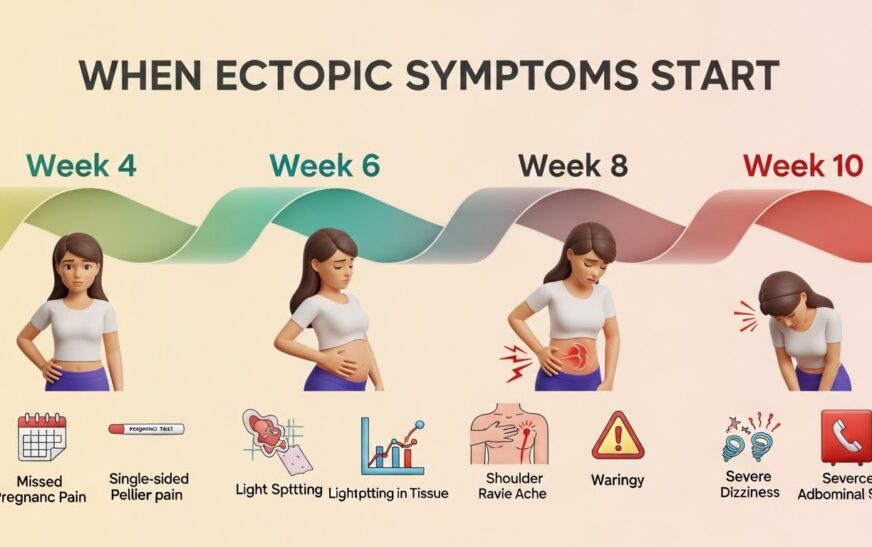
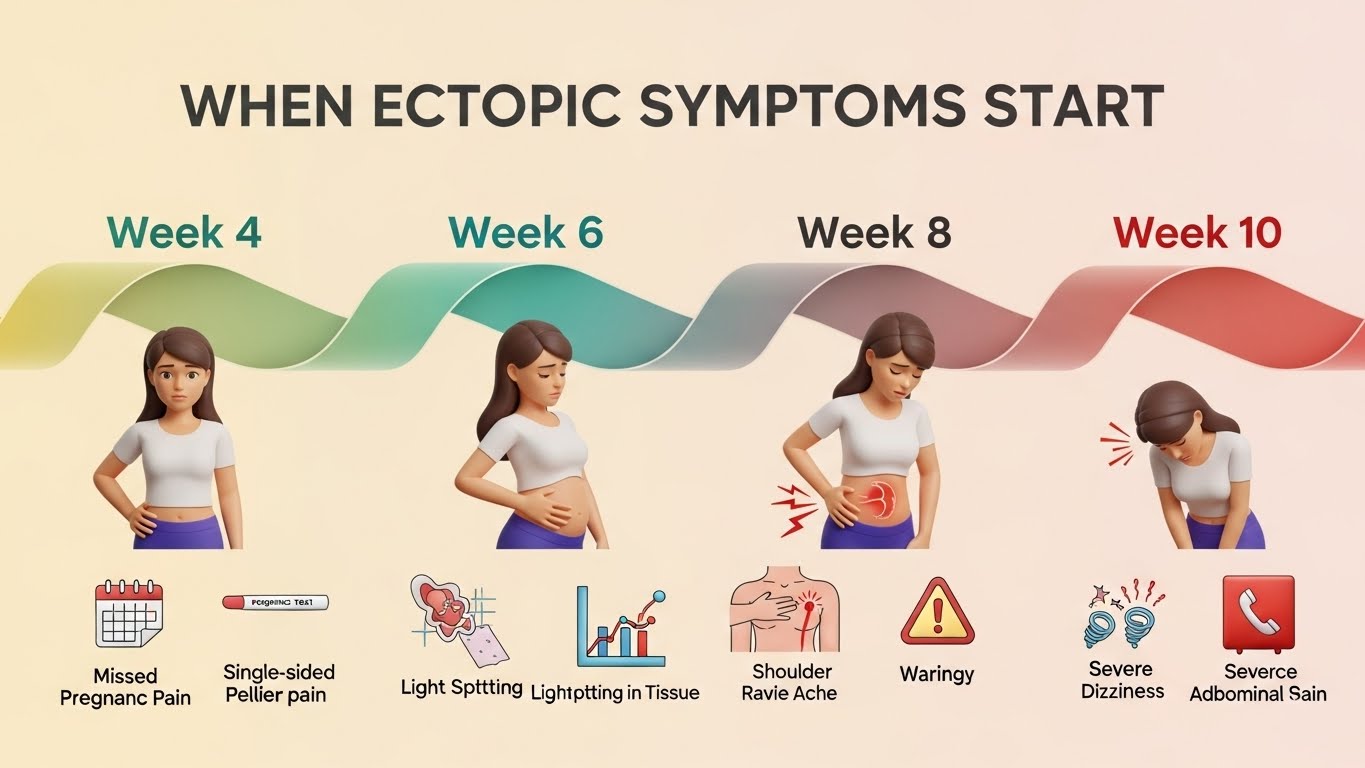
- Shoulder Pain: Sharp pain in the tip of the shoulder along with one-sided pelvic pain can be a sign of an ectopic pregnancy (a pregnancy outside the uterus). This is a medical emergency.
- Duration: If the pain lasts longer than three days without easing up, it is worth a visit to your gynecologist to rule out ovarian cysts or endometriosis.
If your symptoms are mild and align with your cycle, the best thing you can do is stay hydrated and track your symptoms. Knowing how soon can you take a pregnancy test will help you plan your next steps with confidence.
Summary of Findings
To recap: cramping during ovulation is a sign of fertility, not an immediate sign of pregnancy. If you are feeling cramps about a week after ovulation, those could be related to implantation. Because the symptoms are so similar to regular PMS, the only way to be sure is to wait for your period or a positive test result.
Listen to your body, but try not to let every small sensation cause you stress. Your cycle is a complex, beautiful system, and feeling these changes is often just a sign that your body is doing exactly what it is supposed to do.