
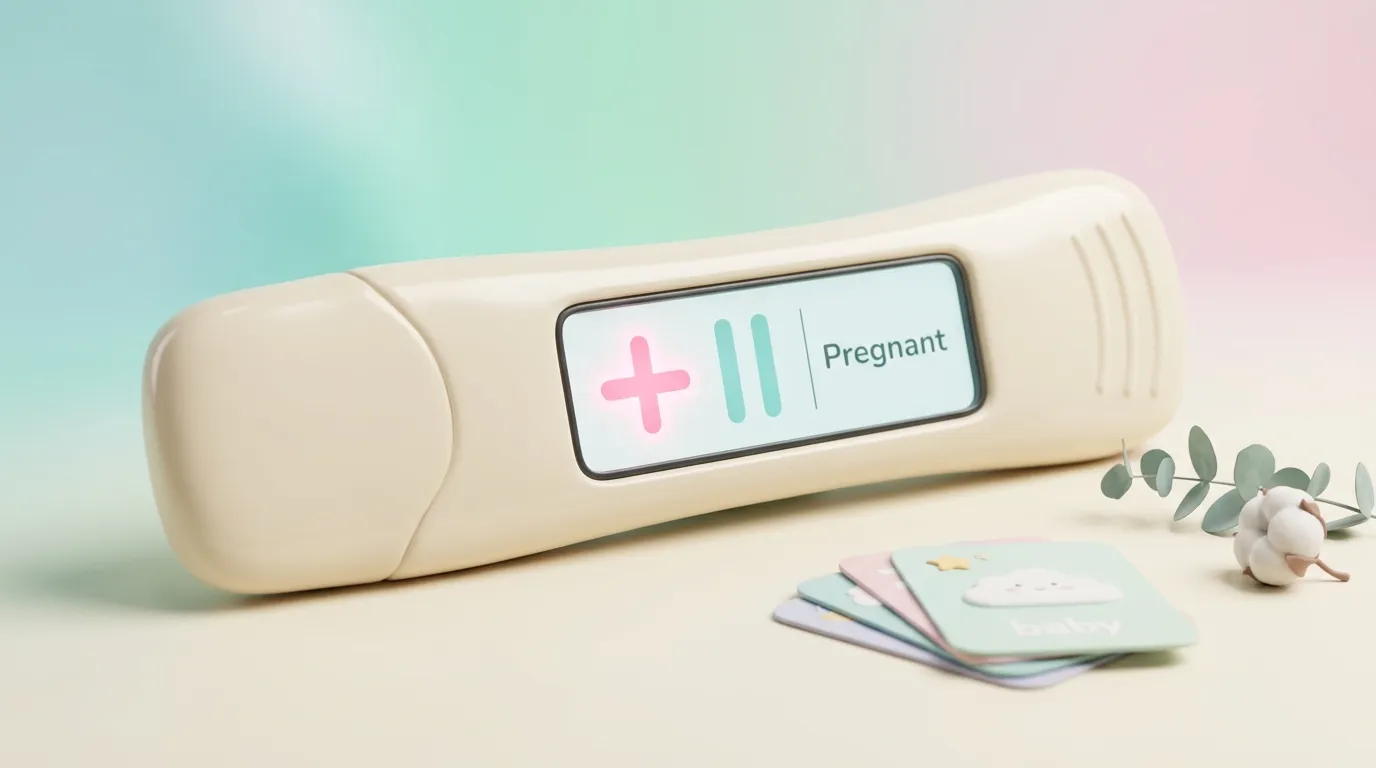
A Clearblue pregnancy test can use words, lines, or symbols. This is why a result diagram from one model should not be used to read another model. The test name on the wrapper or box matters.
This guide explains the common display types and the safest way to handle an unclear result. It does not replace the leaflet supplied with your test, which contains the correct sample time and reading window for that device.
Identify your Clearblue test before reading it
Start by finding the model name. Common formats include digital tests, plus-and-minus tests, and line tests. Some digital versions also estimate weeks since conception. Packaging and features can change, so rely on the current leaflet rather than an old photograph online.
- Digital: The screen usually shows "Pregnant" or "Not Pregnant."
- Plus or minus: A plus symbol indicates a pregnant result. A minus symbol indicates a not-pregnant result.
- Two-line format: A control line shows the test worked. A second test line may indicate hCG.
- Weeks Indicator: The display may add an estimate such as 1—2, 2—3, or 3+ weeks since conception. This is not the same as the gestational age used by clinicians.
How to read a Clearblue digital pregnancy test
A digital result is designed to remove line interpretation. Wait for the device to finish processing. The exact waiting time depends on the model. Current Clearblue information says many digital results appear within about three minutes, while some may appear sooner.
Read the words on the screen:
- Pregnant: hCG was detected at or above the test's threshold.
- Not Pregnant: hCG was not detected at the threshold at that time.
- Blank screen, book symbol, or error: Follow the model's error instructions. The test may be invalid.
A digital "Not Pregnant" result can occur when testing too early. Repeat the test from the expected period or after a few days if the period has not started.
How to read a plus-and-minus Clearblue test
This format normally has a result window and a separate control window. The control line must appear for the result to be valid.
- Plus sign: A second line crosses the horizontal line. This indicates a pregnant result when it appears as described in the instructions and within the reading window.
- Minus sign: Only the horizontal result line appears. This indicates a not-pregnant result when the control line is present.
- No control line: The test is invalid, even if something appears in the result window.
Clearblue's Rapid Detection leaflet says the result should be read within the specified window and changes after that time should be ignored. Check your own leaflet because the exact timing may differ by model or market.
Does a faint plus sign count?
A light line can occur when hCG is low, especially near the expected period. The line must form the symbol described by the manufacturer and appear within the valid reading time. A thin, colorless, off-center, or late mark may not be a valid positive.
Do not compare the darkness of the vertical and horizontal parts as a measure of pregnancy health. Dye flow and line intensity can vary. If the symbol is unclear, wait a few days and use a new test.
For more detail, see our guide to a faint line on a pregnancy test.
What does the control window mean?
The control indicator shows that enough sample moved through the device and that the test procedure worked as intended. FDA guidance for over-the-counter hCG tests describes the control as a check on sample amount, chemical function, and procedure.
If the control line does not appear, do not interpret the result window. Use a new test. Possible reasons include too much or too little urine, incorrect positioning, an expired device, damaged packaging, or a test that was not used according to the instructions.
When should you read the result?
Use a timer. Do not guess. Some Clearblue tests may show a positive result before the full waiting period, but a negative result may require the complete stated time. The instructions supplied with the exact model are the authority.
Do not read a line test after the maximum time. As urine dries, evaporation marks or dye changes may appear. They are not a new result. Digital screens may also switch off after a model-specific period.
Step-by-step testing checklist
- Confirm the model name and read its leaflet.
- Check the expiration date and sealed wrapper.
- Decide whether the model uses urine stream or a collected sample.
- Expose the absorbent tip only when ready.
- Apply urine for the exact number of seconds stated.
- Replace the cap if instructed and place the test in the required position.
- Start a timer.
- Confirm the control indicator.
- Read the result within the valid window.
- Dispose of the test and do not reinterpret it later.
Common reasons for an unclear Clearblue result
Testing before the expected period
hCG may still be below the detection threshold. Early negative results should be repeated at the expected period.
Diluted urine
Drinking a large amount of fluid before an early test can lower the hCG concentration. First-morning urine may help when testing early, though many tests can be used at other times.
Incorrect sample time
Holding the tip in urine for too little or too long may affect how the device runs. Do not use a timing instruction remembered from another model.
Reading outside the window
Checking too soon can miss a developing result. Checking too late can reveal drying marks that should be ignored.
Expired or poorly stored test
Heat, moisture, freezing, torn packaging, or expiration can affect a test. Use a new sealed device stored as directed.
What does a Clearblue Weeks Indicator mean?
Some digital models estimate time since conception. A display such as 1—2 generally refers to weeks since conception, not the pregnancy-week count used in medical care.
Clinicians usually date pregnancy from the first day of the last menstrual period. This count is often about two weeks ahead of conception-based timing. For example, a device estimate of 1—2 weeks since conception may roughly correspond to about 3—4 weeks pregnant by clinical dating.
The indicator is an estimate, not an ultrasound. It cannot confirm fetal development, heartbeat, pregnancy location, or exact conception date. Do not use a changing or unexpected number to diagnose a problem.
What to do after a Pregnant result
A positive home test is usually reliable when used correctly. Contact an appropriate pregnancy-care service or healthcare professional. Review medicines, supplements, long-term health conditions, alcohol, smoking, and any previous pregnancy complications.
Do not stop an essential prescription suddenly without advice. Begin or continue folic acid as recommended for you. Seek urgent care for severe or one-sided abdominal pain, shoulder-tip pain, fainting, marked dizziness, or heavy bleeding.
A positive test confirms hCG was detected. It does not show whether a pregnancy is inside the uterus or developing normally.
What to do after a Not Pregnant result
If you tested early, repeat on the day the period is expected. If the period is already late, repeat after a few days. The NHS notes that negative results are less reliable than positive results, especially when a test is taken too soon.
If repeated tests are negative and the period has not arrived, contact a healthcare professional. Late periods can have many causes, including delayed ovulation, stress, weight changes, intense exercise, breastfeeding, thyroid conditions, and polycystic ovary syndrome.
For timing guidance, read when a pregnancy test is most reliable.
Positive on one test and negative on another
Results can differ because the tests were taken at different times, urine concentration changed, thresholds differ, or one result was read outside its window. A very early pregnancy can also produce a borderline result.
Repeat with a new test according to its instructions. Contact a clinician when results remain mixed, particularly with pain or bleeding. Medical evaluation may include urine testing, quantitative blood hCG, and ultrasound at the appropriate time.
Can medicines change a Clearblue result?
Most common medicines do not contain hCG and do not create a positive pregnancy test. Standard antibiotics, pain relievers, antihistamines, and birth-control hormones generally do not turn the test positive.
Fertility medicines containing hCG can affect results. A recent pregnancy, birth, or pregnancy loss may also leave hCG detectable for some time. Follow the test date given by a fertility clinic after treatment.
Can a Clearblue test show twins?
No. A strong line, early positive, or Weeks Indicator cannot diagnose twins. Multiple pregnancy is confirmed with clinical assessment and ultrasound. Home hCG tests are not designed to count embryos.
Do not use line darkness to estimate hCG or identify the hook effect. If pregnancy is still suspected despite negative tests, contact a clinician rather than diluting urine or changing the sample.
Can you reuse or take apart the test?
No. Home pregnancy tests are single-use devices. Taking a digital test apart exposes internal strips that were not intended for visual interpretation. Lines inside a digital device do not override the screen result.
Do not add more urine after the test has run. Do not dip a midstream test again. Use a new device if the first test was invalid.
Quick troubleshooting guide
| What you see | What to check | Next step |
|---|---|---|
| No control line | Sample amount, method, expiration, and storage | Treat as invalid and use a new test |
| Very light plus or test line | Was it colored and visible inside the valid window? | Treat as a possible positive and repeat if unclear |
| Line appeared later | Compare the time with the leaflet's maximum window | Ignore late changes and use a fresh test |
| Negative but period is late | Early timing, diluted urine, or a later ovulation date | Repeat in a few days or contact a clinician |
Keep the box and leaflet until the result is settled. The model name, lot information, and expiration date can help Clearblue customer support or a healthcare professional understand an unexpected result. Do not make medical decisions from a test that lacked a valid control indicator.
If you need to document a result for your own records, take a photograph during the valid reading window and note the time. A photograph taken later cannot restore an expired reading window. Clinics, employers, insurers, and legal processes may require their own testing method, so a home-test image should not be assumed to meet formal documentation requirements.
When buying a replacement, choose a format you feel comfortable reading. A digital display may reduce line uncertainty, while a basic line test can be less expensive for repeat testing. Neither format is automatically better for every person; correct timing and correct use matter more.
Frequently asked questions
What does one line mean?
It depends on the model and the line's location. On many line tests, a control line alone means not pregnant. Use the diagram in your leaflet.
What if the plus sign is very light?
A light valid plus may indicate pregnancy when it appears within the reading window. Repeat with a new test if the symbol is unclear.
Why is my digital screen blank?
The result may be invalid, the test may have an error, or the display period may have ended. Check the model instructions and use a new test when needed.
Can I trust a result after ten minutes?
Only if your exact model's instructions allow that time. Changes after the stated maximum window must be ignored.
Should I compare my test with photos online?
No. Models, lighting, dye, camera processing, and reading times differ. Use the current instructions supplied with your device.
Sources
- Clearblue: how to use and read its pregnancy tests
- Clearblue Rapid Detection pregnancy-test instructions
- U.S. Food and Drug Administration: home pregnancy tests
- NHS: pregnancy-test timing and results