
Many women wonder if they can add a new piece of jewelry to their collection while expecting. Whether it’s an impulsive earlobe sparkler or a planned navel ring, the timing matters more than you might think. As a gynecologist, I often see patients who want to celebrate their journey with a new piercing, but my medical advice is almost always to wait.
The quick answer for those looking for immediate clarity on pregnancyclarity is this: It is generally not safe or recommended to get a new piercing while you are pregnant. While the procedure itself is quick, the healing process during pregnancy is complicated by your body’s changing immune system and increased blood volume.
Why Most Gynecologists Advise Against New Piercings
When you are pregnant, your body is working overtime to grow a human being. This means your internal resources are shifted away from your own healing and toward the development of your baby. From a clinical perspective, a piercing is a “controlled wound,” and your body treats it as such.
Weakened Immune Response and Infection Risks
During pregnancy, your immune system naturally suppresses itself. This is a brilliant biological trick to prevent your body from rejecting the fetus, which is technically a “foreign” entity. However, this lower defense makes you much more vulnerable to localized infections. A simple ear piercing that would normally heal in weeks could easily become an entry point for bacteria. If a localized infection turns systemic (entering the bloodstream), it can pose a direct threat to your baby’s health.
Increased Blood Flow and Healing Times
Your blood volume increases by nearly 50% when you’re expecting. This higher vascularity means that any new wound is likely to bleed more and swell significantly more than usual. Chronic swelling at a piercing site prevents the skin from “setting” around the jewelry, which often leads to prolonged healing times and excessive scarring.
Risk of Bloodborne Illnesses
While reputable shops use autoclaves and sterile needles, the risk of contracting bloodborne pathogens like Hepatitis B, Hepatitis C, or HIV is never zero. These infections can be passed directly to the fetus, leading to lifelong health complications. Most professional piercers in the USA will actually refuse to work on pregnant clients because the legal and medical risks are simply too high.
Safety by Piercing Location
Different parts of the body react differently to the physical shifts of pregnancy.
Belly Button Piercings and Skin Stretching
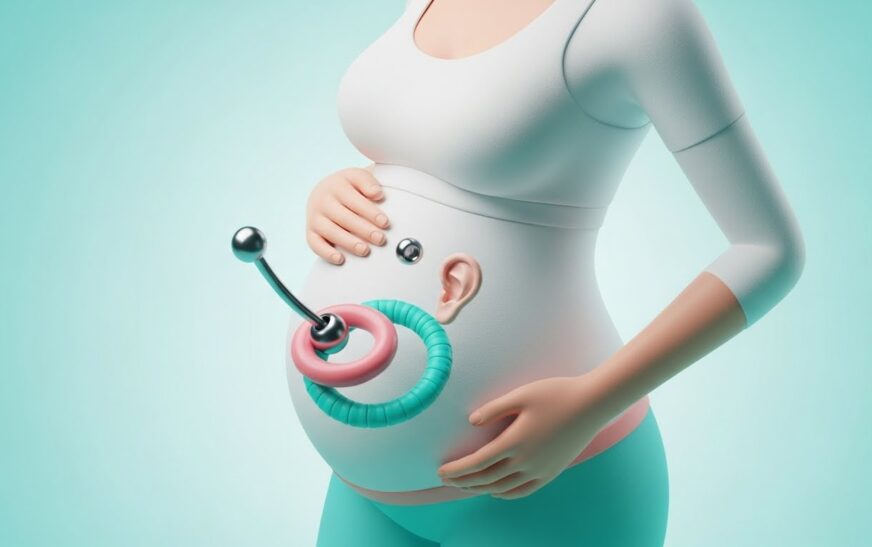
The navel is perhaps the most problematic spot. As your abdomen expands, the skin around the navel thins and stretches. If you have a new piercing here, the jewelry will likely migrate (move toward the surface) or be rejected entirely by the body. Even for those with older piercings, it is helpful to know when the bump starts showing in pregnancy so you can prepare to switch your jewelry before the skin becomes too tight.
Nipple Piercings and Breast Changes
Your breasts begin preparing for lactation almost immediately after conception. Increased sensitivity and growth are standard. A new piercing in this area is extremely painful during pregnancy and carries a high risk of mastitis—an infection of the breast tissue. This can cause blocked ducts and make future breastfeeding very difficult.
Ear and Facial Piercings
You might think an earlobe or nose piercing is “safe” because it’s far from the womb. However, the risk of infection remains the same. Additionally, many women experience “pregnancy rhinitis” or swelling in the nasal passages. Getting a nose piercing while dealing with a stuffy, sensitive nose often leads to irritation bumps and discomfort.
Managing Existing Piercings While Expecting
If you already have healed piercings, you usually don’t need to get rid of them. However, you do need to make some adjustments to stay comfortable.
When to Swap for Flexible PTFE Jewelry
As your belly grows, traditional surgical steel or gold bars can become rigid and painful. I recommend my patients switch to PTFE (Polytetrafluoroethylene) or Bioflex jewelry. These are medical-grade, flexible plastics that bend with your body. They are also non-metallic, which is great if you need an unexpected ultrasound or MRI.
Signs of Infection to Watch For
If you notice any of the following, call your doctor immediately:
- Pus or thick yellow/green discharge from the hole.
- Red streaks extending away from the piercing site.
- Heat or a throbbing sensation that doesn’t go away.
- Fever or chills, which could indicate the infection is spreading.
While you might be tempted to reach for the medicine cabinet, remember to check can you take ibuprofen during pregnancy before treating any pain, as certain over-the-counter meds are restricted.
Preparing for Labor: Do You Have to Remove Jewelry?
Most hospitals and birthing centers in the USA ask you to remove all jewelry before delivery. This isn’t just to be strict; it’s a safety measure. If you require an emergency C-section, surgeons use electrocautery tools to stop bleeding. Metal jewelry can conduct electricity and cause skin burns if the grounding pad isn’t perfectly placed.
Furthermore, if you experience complications like how much bleeding is normal in early pregnancy or late-stage hemorrhaging, medical teams need clear access to your body without snagging on rings or studs.
Medical Professional’s Tips for After Childbirth
The best approach is to treat your body with grace and wait until you have fully recovered before visiting the piercing studio.
The Best Time to Get Re-Pierced
I suggest waiting at least three to six months after your baby is born. This gives your hormones time to level out and your immune system time to return to its full strength. If you are breastfeeding, you should wait even longer for nipple piercings to avoid any risk of transferring bacteria to your infant or causing a choking hazard with loose jewelry.
Safe Metal Choices for Sensitive Skin
Once you are ready, stick to hypoallergenic metals. Titanium is my top recommendation for postpartum women because it contains no nickel and is highly compatible with human tissue. This reduces the chance of developing a new skin allergy during the healing phase.
At PregnancyClarity, we want you to feel like yourself while staying safe. Pregnancy is a temporary season, and that beautiful new piercing will look even better when your body is fully ready to heal it.