From the very moment your diagnostic kit reveals a positive readout, a wave of joyful anticipation takes over. Alongside tracking your development, one of the most exciting milestones of the entire maternal journey is waiting for that beautiful, unmistakable physical transformation. Many expectant mothers find themselves standing in front of the bathroom mirror every morning wondering: when do you start showing pregnancy bumps, or when will the rest of the world finally notice your expanding waistline?
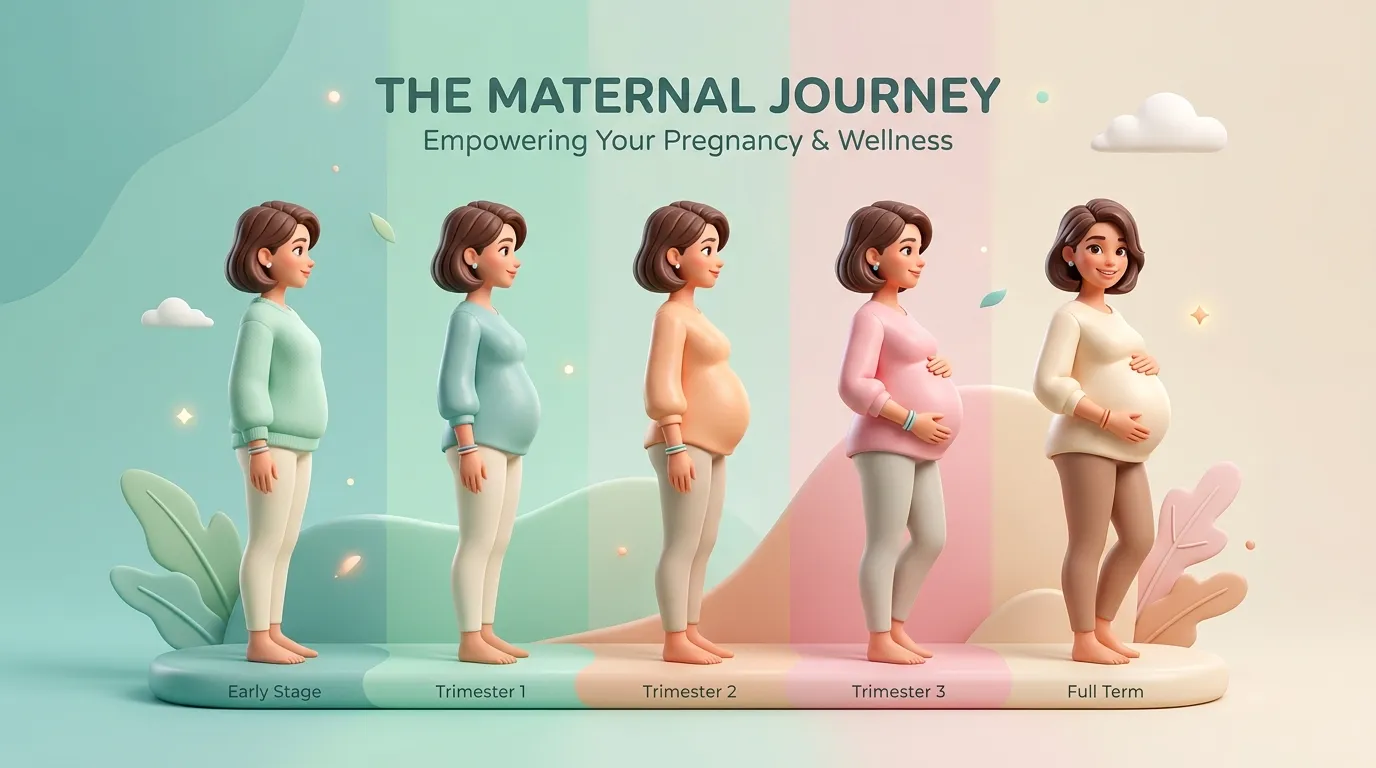
The General Clinical Timeline: On average, most women notice their real baby bump emerging somewhere between **weeks 12 and 16 of gestation**. This is the exact physiological phase where your expanding uterus outgrows your pelvic cavity and rises up into your lower abdomen. However, when you actually begin to see changes depends heavily on whether this is your very first baby or a subsequent gestation.
First-Time Mothers: When Do You Start to Show with Your First Pregnancy?
If you are navigating your baseline introduction to motherhood, your physical transformation will usually take a little longer to become visible to onlookers. When tracking when do you start to show with your first pregnancy, the clinical norm centers between **weeks 16 and 20**.
The underlying reason for this extended timeline is that your rectus abdominis muscles and uterine ligaments are completely tight, firm, and unmarred by past expansions. These muscle structures act like a tight corset, holding your growing uterus inward toward your spine for as long as possible. Consequently, instead of a sudden round protrusion, a first-time mother may simply look like she enjoyed a heavy meal during her late first trimester.
Subsequent Journeys: When Do You Start Showing on a Second Pregnancy?
If you are welcoming another child into your family, you will notice that your old maternity clothes start calling your name significantly earlier.
When evaluating when do you start showing in pregnancy with second pregnancy sequences, the bump can comfortably pop out as early as **weeks 10 to 14**. Because your abdominal wall and uterine muscle memory were permanently relaxed by your previous delivery, they offer much less structural resistance this time around. The moment your hormone levels surge, your body quickly assumes its familiar maternal shape, making a second, third, or fourth baby visible to the naked eye almost immediately.
The Great Illusion: Early Bloating vs. True Uterine Showing
Many women feel shocked when they appear to show a tiny bump at a mere 6 or 8 weeks along. At Pregnancy Clarity, we want to clear away this architectural mystery. If you are noticing a prominent protrusion during very early phases, you are experiencing intense **gastrointestinal progesterone bloating**, not an expanding fetus.
Progesterone relaxes the smooth muscular tissue inside your digestive loops to maximize nutrient extraction for your baby. This cellular slowing creates a backup of gas, leading to structural stomach distension. To help track if your digestive system is executing smoothly or experiencing prolonged blocks, look over our detailed clinical breakdown on whether miralax safe during pregnancy parameters offer secure relief, or review how to manage systemic tracking if diarrhea is a sign of pregnancy shifts or normal hormone adjustments.
Secondary Drivers: Why Body Type and Twins Change the Timeline
Every woman's frame carries a unique anatomical layout. Several critical variables can completely shift when do you start showing in pregnancy metrics forward or backward:
- Carrying Multiples: If you are blessed with twins or triplets, your uterus must expand exponentially fast to accommodate the collective placental mass. When tracking when do you start showing in pregnancy with twins, a clear protrusion forms during your early first trimester, usually before week 10.
- Maternal Height & Torso Length: Taller women with long torsos possess more vertical space for the uterus to expand upward. This extra room often keeps the bump hidden until deep into the second trimester. Conversely, shorter women have limited vertical space, forcing the uterus to push directly outward much sooner.
- Weight Parameters: If you are looking into when do you start showing pregnancy when overweight, the bump may take a little longer to form a defined, round silhouette. The existing layers of abdominal adipose tissue can soften the initial outward line of the uterus, meaning the bump often becomes structurally distinct around week 20 or later.
ACOG Safety Safeguards for Early Symptoms
While waiting for your bump to develop, keep a close eye on any accompanying systemic symptoms. If you experience viral illnesses during your first trimester, do not self-medicate blindly with complex cold syrups. Ensure you cross-reference your selections by verifying whether is robitussin safe during pregnancy configurations match plain criteria, or verify why original is sudafed safe during pregnancy entries are strictly prohibited during early embryonic organogenesis. If you are still in the ultra-early phase waiting to confirm your timeline milestones, follow our medical instructions for reading a clearblue pregnancy test line readout properly.
Frequently Asked Questions: Real Motherhood Bump Timelines
To address your urgent timeline concerns and clear away tracking anxieties, our medical review panel at Pregnancy Clarity has answered the top 10 long-tail questions:
1. When do you start showing pregnancy signs like physical body changes?
Minor physical indicators—such as darkened areolas, breast swelling, and localized lower abdominal thickening—typically start showing around weeks 6 to 8 as your systemic blood volume expands rapidly.
2. When do you start showing first pregnancy profiles to the public?
For a first-time mother, a defined baby bump that is clearly noticeable to strangers usually forms between weeks 18 and 22, as your firm abdominal muscles take longer to stretch outward.
3. Why am I showing during my second pregnancy at only 8 weeks along?
Showing at 8 weeks is almost entirely caused by intense digestive bloating and fluid retention driven by early progesterone surges, paired with relaxed muscle memory from your previous delivery.
4. When do you start showing third pregnancy bumps chronologically?
During a third pregnancy, your abdominal muscles possess minimal resistance due to past stretching. Your baby bump can pop out very early, frequently establishing a defined round silhouette by week 10 or 12.
5. Does a retroverted or tilted uterus change when you start to show pregnancy?
Yes. If your uterus tilts backward toward your spine, your baby bump will remain hidden inside your pelvis longer. The uterus typically straightens out around week 12, causing the bump to emerge later than average.
6. When do you typically start showing in pregnancy if you have very strong abs?
Athletes or women with exceptionally strong, well-conditioned core muscles will usually show much later. Their tight abdominal walls contain the expanding uterus firmly inward, keeping the bump hidden until late in the second trimester.
7. When do you start showing pregnancy when overweight or carrying extra abdominal weight?
If you carry a higher baseline body mass index, your early bump may blend into your existing tissue shapes. A clearly defined, firm, round pregnancy profile usually becomes distinct to onlookers around week 20 to 24.
8. Can I look at a when do you start showing in pregnancy week by week tracker for an exact date?
While week-by-week photo logs offer general structural guideposts, they cannot provide a rigid date. Factors like height, frame structure, amniotic fluid volume, and genetics create massive variations between individual bodies.
9. When do you start showing pregnancy symptoms like morning sickness or deep exhaustion?
Systemic pregnancy symptoms usually manifest very early, striking between weeks 4 and 6 of gestation, which is long before any physical baby bump emerges from your pelvis.
10. Why does my bump look much larger in the evening than it does in the morning?
This is a very common structural phenomenon driven by your digestion. Throughout the day, food processing and gas accumulate inside your relaxed intestines, expanding your abdomen. After a night of rest, your bowel decompresses, making the morning bump appear smaller and firmer.