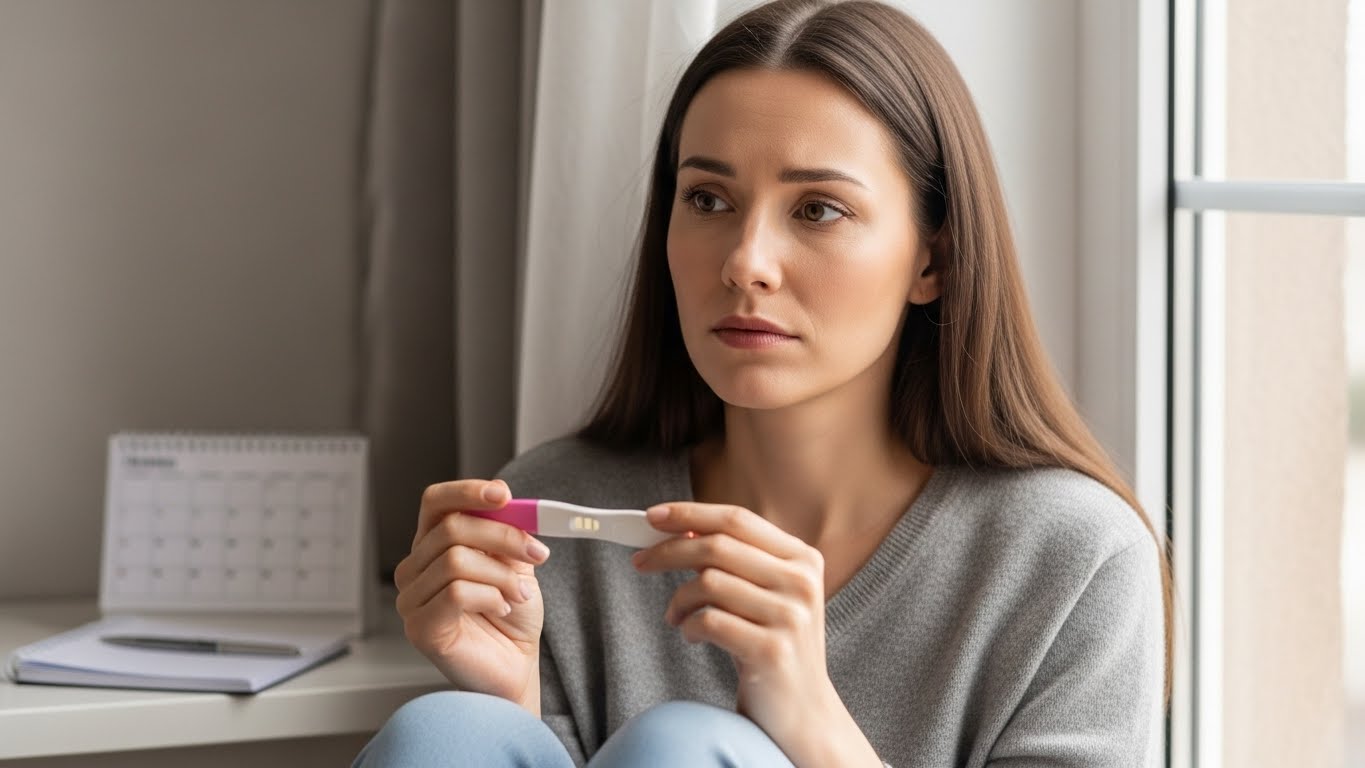

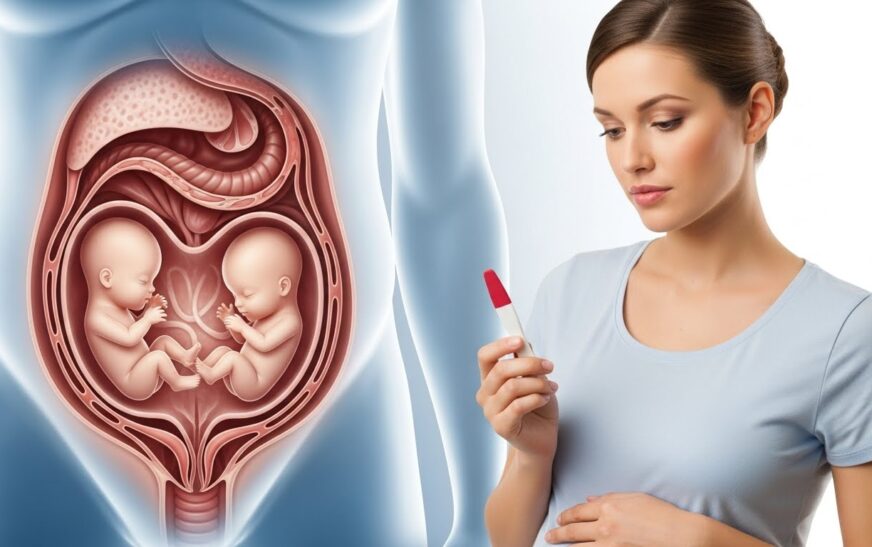
This article discusses a frustrating and confusing situation many women face: feeling every symptom of pregnancy while looking at a “Negative” test result. As a gynecologist, I have seen patients come into my clinic convinced they are carrying twins, only to be baffled by their home test results.
The truth is, while home pregnancy tests are generally reliable, carrying multiples changes the chemical environment of your body. In some cases, having “too much” of a good thing, in this case, the pregnancy hormone HCG—can actually cause a test to fail.
The Science of the “Hook Effect” in Multiple Pregnancies
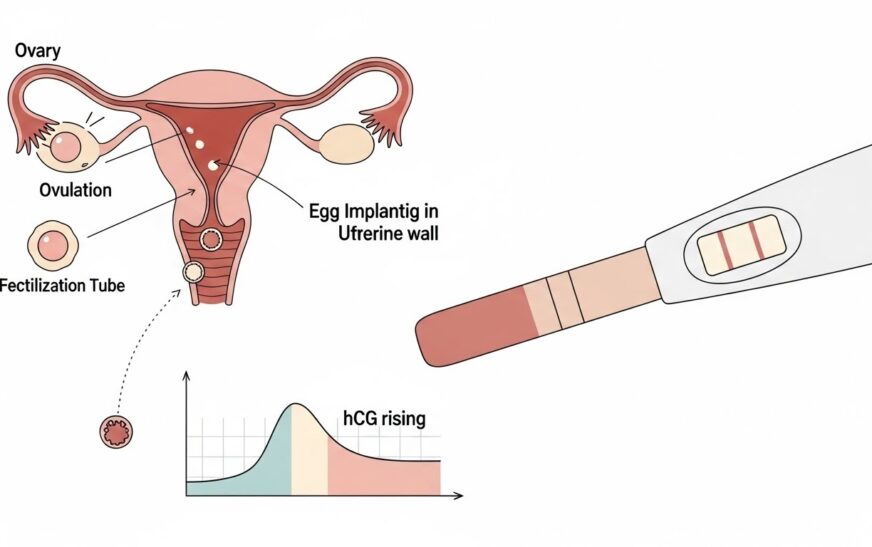
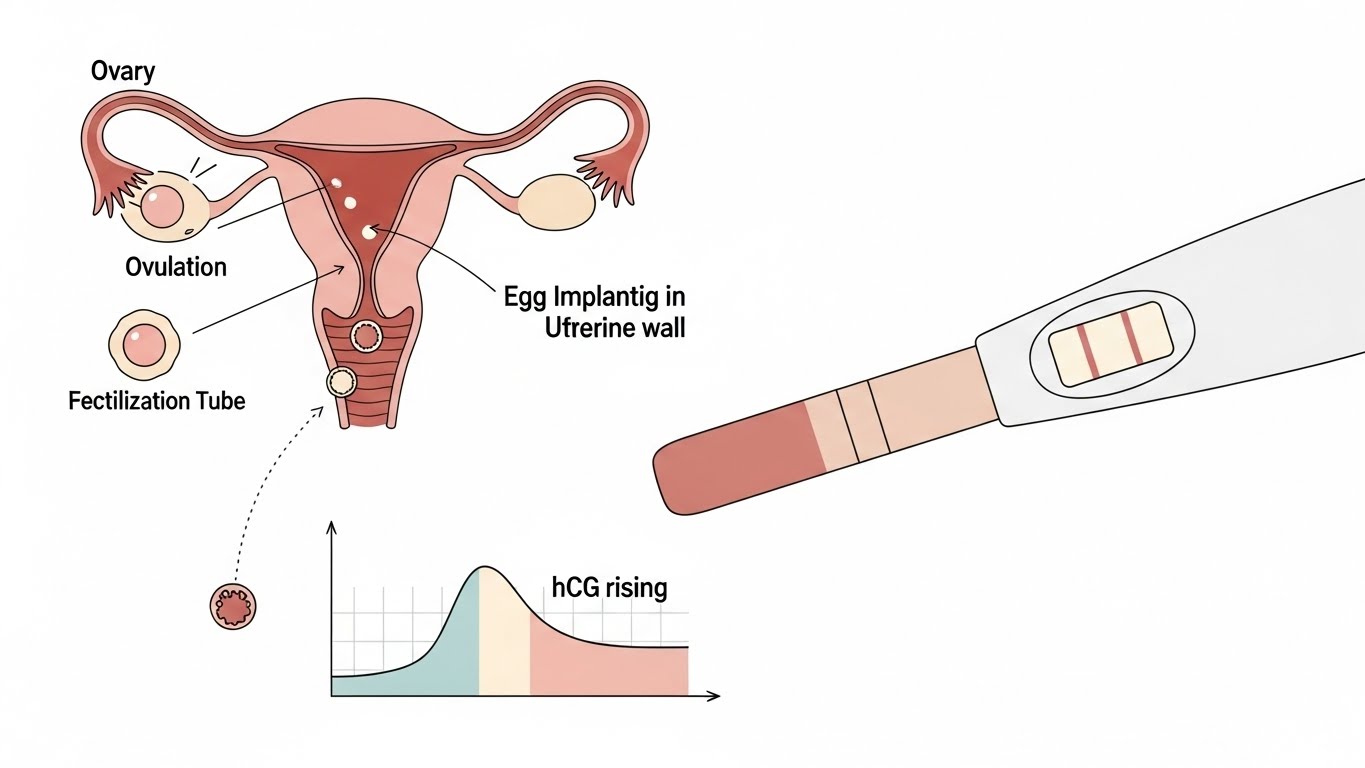
Most people assume that more hormones would lead to a darker, faster line on a pregnancy test. However, the biochemistry of a standard urine test is designed for a specific range of Human Chorionic Gonadotropin (HCG). When you are carrying twins or triplets, your HCG levels are significantly higher than in a singleton pregnancy.
This leads to a medical phenomenon known as the Hook Effect. Imagine a standard pregnancy test strip as a small “bridge” that needs to catch hormone molecules to trigger a color change. When the concentration of HCG is normal, the molecules bind to the antibodies on the strip correctly.
However, when HCG levels are extremely high, the excess hormone “clogs” the test strip. The molecules saturate the antibodies so quickly that they cannot form the necessary sandwich complex required to show a positive line. To the test, it looks like there is no hormone at all, resulting in a false negative.
How HCG Levels Differ in Twin vs. Singleton Pregnancies
In a typical singleton pregnancy, HCG levels double every 48 to 72 hours. With twins, these levels don’t just double; they often soar. By the time you reach 8 to 11 weeks of gestation, your hormone levels peak. It is during this window that the Hook Effect is most likely to occur, as the test kit simply cannot handle the sheer volume of the hormone in your urine.
Why Too Much Hormone Confuses a Standard Test Strip
Standard home pregnancy tests (HPTs) are qualitative, not quantitative. They are designed to detect a “yes” or “no” threshold. Because the antibodies on the test strip are finite, an overwhelming amount of HCG prevents the chemical reaction from completing. It is a technical limitation of the plastic stick, not a reflection of your physical health.
Common Reasons for a Negative Test When You Are Expecting Twins
Aside from the Hook Effect, other factors can lead to a negative result even when your body is working overtime to grow two babies.
Testing Too Early in the Gestational Cycle
Even with twins, if you test days before your missed period, the HCG might not have reached the detectable threshold in your urine. While twins produce more hormones, every pregnancy starts at zero. If you test too early, you might catch the “rising” phase before it’s strong enough to register, or you might be in that awkward middle ground where the levels are just beginning to spike.
Diluted Urine and Its Impact on Accuracy
I always tell my patients to use their first morning urine. If you drink a large amount of water before taking a test, you dilute the concentration of HCG. With twins, your kidneys are already working harder, and increased thirst is a common early symptom. If you are drinking gallons of water to stay hydrated, you might be washing away the very evidence you are looking for on that test strip.
Recognizing Twin Pregnancy Symptoms Despite a Negative Result
If your test says negative but your gut says otherwise, pay attention to your physical cues. Twin pregnancies often “hit harder” and earlier than singletons.
Extreme Morning Sickness and Fatigue
Because of the higher HCG levels, women carrying twins often experience more intense nausea, sometimes escalating to Hyperemesis Gravidarum. If you find yourself unable to keep food down or feeling an exhaustion that a full night’s sleep won’t fix, your body is likely signaling a high-hormone environment.
Understanding When You Start Showing with Multiples
One of the most common signs that something is different is how quickly your clothes begin to feel tight. While many women wonder when do you start showing in pregnancy, those with twins often notice a “pooch” or uterine expansion much earlier, sometimes as early as the first trimester, due to the increased size of the uterus accommodating two sacs.
When “False” Results Cause Concern: Spotting and Cramping
It is very common for women to see a negative test and then experience light bleeding, leading them to believe they aren’t pregnant after all. However, in twin pregnancies, implantation bleeding can sometimes be slightly more noticeable because two embryos are attaching to the uterine lining.
It is vital to monitor how much bleeding is normal in early pregnancy to ensure you aren’t mistaking a pregnancy complication for a period. If you have a negative test but are experiencing heavy cramping or bleeding along with pregnancy symptoms, you should contact a healthcare provider immediately.
How to Get an Accurate Result if You Suspect Twins
If you suspect the Hook Effect is giving you a false negative, there are a few ways to get the clarity you need.
The Dilution Method: A Simple Home Hack
It sounds counterintuitive, but if the Hook Effect is the culprit, diluting your urine can actually produce a positive result. By mixing a small amount of urine with water, you lower the HCG concentration to a level that the test antibodies can finally “catch.” If a diluted sample shows a faint positive while a concentrated sample shows a negative, you have likely confirmed the Hook Effect.
Why a Quantitative Blood Test is the Gold Standard
A home test is a “yes/no” tool. A laboratory blood test, however, measures the exact numerical value of HCG in your blood. This is the most reliable way to confirm a twin pregnancy. In my practice, if a patient has strong symptoms but negative urine tests, a blood draw is the first thing we order.
Scheduling an Early Ultrasound for Confirmation
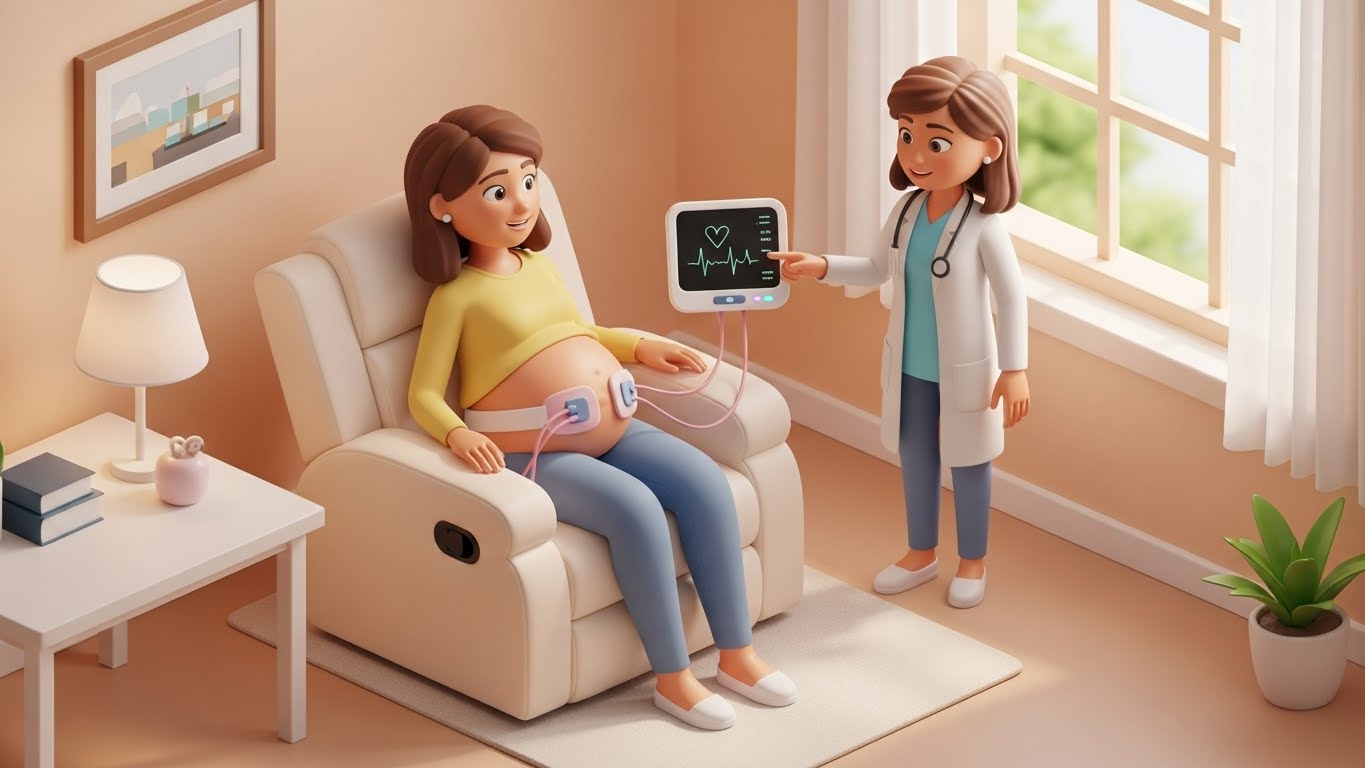
Ultimately, a high HCG count suggests twins, but an ultrasound confirms them. An early scan can identify two gestational sacs and two heartbeats, providing the final answer that a home test may have missed.
Practical Tips from a Gynecologist’s Desk
- Don’t Panic Over a Negative: If you have missed your period and feel pregnant, wait 48 hours and test again using a different brand.
- Track Your Symptoms: Keep a log of your nausea, breast tenderness, and fatigue. This data is incredibly helpful when you finally sit down with your doctor.
- Skip the Digital Tests: If you suspect the Hook Effect, digital tests can be even more finicky than traditional line tests. Stick to the “dye” tests for the dilution hack.
Frequently Asked Questions
Yes. As explained with the Hook Effect, extremely high levels of HCG can saturate the test antibodies, preventing the chemical reaction that creates the positive line
Usually, twins can be seen on a transvaginal ultrasound as early as 6 to 7 weeks.
Not necessarily. Digital tests still rely on the same antibody technology. In fact, they can sometimes be more prone to errors when hormone levels are outside the “normal” singleton range.
If you are currently staring at a negative test but your body is telling a different story, trust your instincts. Schedule an appointment with your OB-GYN to get a blood test and an ultrasound. Whether it is one baby or two, getting an early start on prenatal care is the best step you can take for your health.