
What you should eat before a pregnancy glucose test depends on which test your clinic ordered. The common one-hour, 50-gram glucose challenge is usually nonfasting, often administered between 24 and 28 weeks in the second trimester. A two- or three-hour oral glucose tolerance test usually starts with a fasting blood draw, so breakfast is not allowed. Understanding how this test helps diagnose gestational diabetes is key to maintaining a healthy pregnancy.
Do not try to "beat" the screening. A deliberately carbohydrate-free breakfast, an unrequested fast, or unusually intense exercise can make the day harder without giving your care team the ordinary metabolic picture they need. Confirm the test name, follow the lab's instructions exactly, and tell staff if you ate when you were supposed to fast. For balanced carbohydrate options, see our guide on eating dates in pregnancy.
First, Identify Your Glucose Test
People often use "glucose test" for several different procedures. That creates most of the breakfast confusion. Check your appointment message or order for words such as "challenge," "screen," "tolerance," "one hour," "two hour," or "three hour." If the order is unclear, call the clinic before the test rather than guessing.
One-hour glucose challenge test
In the common U.S. two-step approach, the first test is a screening test. You drink a solution containing 50 grams of glucose, then have blood drawn one hour later. Labcorp's ACOG-aligned collection instructions say a fasting sample is not required, and Mayo Clinic says patients can generally eat and drink as usual before the challenge. Many offices still give local instructions about when to stop eating or what beverages are allowed, so use their directions.
This screening does not diagnose gestational diabetes by itself in most protocols. A result above the clinic's cutoff means a longer diagnostic test may be needed. Cutoffs vary; some practices use 130 or 135 mg/dL and others use 140 mg/dL. Your lab report and clinician—not a number from another person's pregnancy—determine the next step.
Three-hour oral glucose tolerance test
In the U.S. two-step approach, an elevated screen is often followed by a fasting, 100-gram, three-hour oral glucose tolerance test. A fasting blood sample is taken before the drink, followed by timed samples. Lab protocols commonly require no food and only water for 8 to 14 hours beforehand. Smoking and physical activity may also be restricted during the test because they can affect results.
The diagnostic test is not the morning to choose a "low-carb breakfast." It is the morning to eat nothing until the lab says the final blood draw is complete. Bring a balanced snack for afterward if the clinic permits it, especially if you have a long trip home.
Two-hour 75-gram test
Some clinicians, health systems, and countries use a one-step 75-gram oral glucose tolerance test. It also begins fasting, then measures glucose at timed points after the drink. Do not assume the instructions for a friend's one-hour screening apply to your two-hour test.
| Common test | Typical preparation | Purpose |
|---|---|---|
| 50-g, one-hour challenge | Usually nonfasting; follow local instructions | Screening—an elevated result may need confirmation |
| 100-g, three-hour tolerance test | Usually an 8—14-hour fast with water only | Diagnostic test in the two-step approach |
| 75-g, two-hour tolerance test | Fasting blood draw before the glucose drink | One-step diagnostic approach used by some systems |
What to Eat Before a Nonfasting One-Hour Test
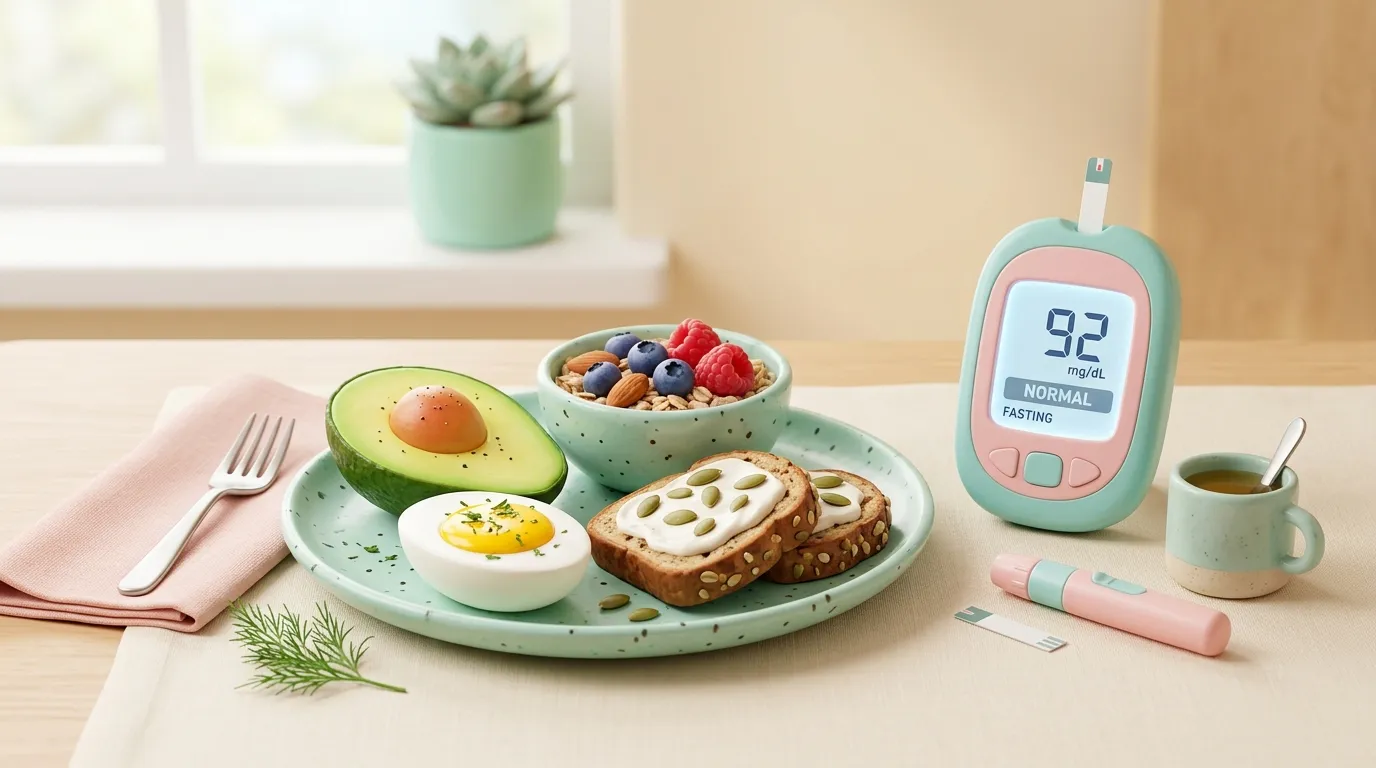
If your clinic says you may eat, choose an ordinary breakfast you tolerate well. The goal is not to manipulate the result. A balanced meal with protein, fiber-rich carbohydrate, and unsaturated fat is more comfortable than a large sugary breakfast, and it reflects the type of meal recommended during pregnancy generally.
Reasonable options include:
- Eggs with whole-grain toast and vegetables. Cook eggs until the yolk and white are firm. Add spinach, tomato, or avocado if those foods sit well.
- Plain Greek yogurt with nuts and berries. Choose pasteurized yogurt, and check the label for added sugar rather than assuming flavored yogurt is lightly sweetened.
- Oatmeal with peanut butter or nuts. Plain oats are a normal high-fiber carbohydrate; they do not need to be banned. Avoid turning the bowl into dessert with syrup or a large amount of sweetened granola.
- Whole-grain toast with nut butter and a boiled egg. This is portable and usually easier during morning nausea than a heavy meal.
- Cottage cheese with whole-grain crackers and cucumber. Confirm the cheese is pasteurized. Our pregnancy cheese guide explains label checks.
- A savory breakfast wrap. Use a modest whole-grain tortilla, fully cooked egg or chicken, and vegetables rather than a sweet sauce.
Portion size matters for comfort. A very large meal followed immediately by a concentrated glucose drink can worsen nausea. If morning sickness is a problem, ask whether the appointment can be scheduled at a better time and whether a small familiar meal is acceptable.
Foods and Drinks to Handle Carefully
Unless your clinic gives a specific restriction, no normal food can "ruin" a nonfasting screen. Still, drinking a large soda, sweet coffee, juice, or syrup-heavy smoothie just before a glucose drink is unlikely to help comfort or produce a useful picture of your normal routine. Avoid an unusually high-sugar meal made specifically for test day.
That does not mean all carbohydrates cause false positives. Gestational diabetes screening is designed to identify reduced glucose tolerance caused largely by pregnancy hormones and insulin resistance. A person who screens high did not fail morally or necessarily cause the result with breakfast. The follow-up process exists because screening favors sensitivity and does not diagnose every person who crosses the cutoff.
Caffeine rules vary. Plain coffee has little carbohydrate, but a large sweetened latte does not. Some labs permit usual caffeine before a nonfasting screen; others request water only for a certain period. Confirm before ordering. During pregnancy, ACOG advises keeping caffeine below 200 milligrams per day, including coffee, tea, chocolate, and medicine sources.
Do not skip prescribed medicine unless the clinician who ordered the test tells you to. Steroids and some other medicines can affect glucose, but abruptly stopping treatment can be harmful. Give the lab an accurate medication and supplement list.
What to Do the Day Before
Eat your usual pattern unless the clinic gave a diagnostic-test preparation plan. A sudden low-carbohydrate diet before an oral glucose tolerance test can affect physiology and does not follow many laboratory protocols. Some protocols explicitly ask patients to consume a regular diet with adequate carbohydrate for several days before testing.
Hydrate normally. Dehydration can make the blood draw harder and can intensify nausea or headache. Do not overconsume water in an attempt to alter results. Get routine sleep if possible, and avoid a new extreme workout. Acute illness, vomiting, severe stress, or certain medications may affect glucose; call the clinic if you are unwell enough that the test might need rescheduling.
Pack your appointment essentials: the laboratory order, identification, a list of medicines, a book or headphones, and food for afterward. If you have a history of fainting with blood draws, tell staff before the first sample and ask to recline.
Plan transport if you have previously become faint during fasting or glucose testing. The diagnostic test can occupy much of the morning, and childcare or work pressure should not force you to leave between timed samples. Arriving a little early also gives staff time to confirm the order before the clock starts. If you use a continuous glucose monitor or home meter, do not substitute those readings for laboratory blood samples unless the clinician has created an alternative protocol for you.
During the Glucose Test
Follow timing instructions precisely. The lab may ask you to finish the drink within a short window and remain in the waiting area. Once the drink is finished, eating, gum, candy, smoking, or unapproved drinks can invalidate the procedure. Many protocols allow only small amounts of plain water.
Stay seated unless staff direct otherwise. Walking laps or climbing stairs to lower glucose is not part of a valid test and may affect results. Note the exact time the drink was completed, but let laboratory staff manage the official schedule.
The glucose solution can cause nausea, sweating, shakiness, headache, or light-headedness. Tell staff immediately if you feel faint or vomit. Vomiting may mean the test needs to stop and be repeated or replaced with a clinician-approved alternative. Do not hide it to avoid another appointment; an invalid result cannot guide safe care.
Understanding the Result Without Panic
An elevated one-hour challenge is common and does not necessarily mean you have gestational diabetes. It means your result met the practice's threshold for more evaluation. Laboratories and clinical organizations use different thresholds and testing pathways, so online comparisons can be misleading.
The longer test compares fasting and timed blood samples with protocol-specific cutoffs. In a common three-hour method, diagnosis usually requires two or more values at or above the selected thresholds, but practices may use different criteria. A one-step 75-gram test uses another set of values. Ask for the actual report and the name of the criteria used.
Gestational diabetes can occur without obvious symptoms or traditional risk factors. ACOG recommends screening during pregnancy, typically at 24 to 28 weeks when early testing has not already identified diabetes. If diagnosed, nutrition support, glucose monitoring, activity, and medication when needed reduce risk. See our complete gestational diabetes guide for what happens after diagnosis.
Why Accurate Screening Matters
Placental hormones make cells more resistant to insulin as pregnancy progresses. Most bodies compensate by producing more insulin; gestational diabetes develops when that response is not enough. It is not proof that a person ate badly, and eating a "perfect" breakfast cannot eliminate biologic risk.
When blood glucose remains high, the fetus receives extra glucose and may grow larger than expected. Gestational diabetes is associated with hypertensive disorders, birth complications, neonatal low blood sugar, and a higher chance of type 2 diabetes later for the parent. Good management improves outcomes, which is why an honest test is more useful than trying to obtain the lowest possible number.
After a pregnancy affected by gestational diabetes, ACOG recommends postpartum glucose testing 4 to 12 weeks after birth and ongoing diabetes screening every 1 to 3 years. Keep the diagnosis in your long-term medical history even if glucose returns to normal after delivery.
If Your Instructions Conflict With This Guide
Follow the clinic. Some offices schedule even the one-hour screen fasting for workflow consistency, use a different glucose amount, or combine tests. A generic article cannot see your order. Ask these four questions: What is the full test name? Must I fast, and for how long? Is plain water allowed? Should I take my morning medicines?
If you accidentally ate before a fasting test, tell the lab exactly what and when you ate. Rescheduling is frustrating, but proceeding without disclosure may produce a misleading result. If you fasted for a nonfasting screen and feel unwell, tell staff before drinking the solution.
Frequently Asked Questions
Can I eat eggs before the one-hour pregnancy glucose test?
If your clinic says the test is nonfasting, fully cooked eggs can be part of a normal breakfast. Add a usual portion of fiber-rich carbohydrate rather than constructing a zero-carbohydrate meal solely to influence the screen.
How many hours before the one-hour test should I stop eating?
There is no universal stop time for the nonfasting 50-gram challenge. Some clinics allow normal eating; others give a specific cutoff. Use the instructions attached to your order and call if they are missing.
Can breakfast cause a false-positive glucose screen?
A very sugary meal may affect a nonfasting value, but carbohydrates do not automatically create a false positive. The screen intentionally identifies people who need a diagnostic test. Do not blame yourself or try to game it; follow the preparation protocol.
What should I eat after the glucose test?
Once staff confirm the test is complete, choose a balanced meal or snack with protein, carbohydrate, and fluids—for example, a sandwich on whole-grain bread, yogurt with nuts, or eggs and toast. If you remain shaky, faint, or keep vomiting, alert the clinic rather than driving.
Sources
- American College of Obstetricians and Gynecologists: Gestational Diabetes
- Mayo Clinic: Glucose Challenge Test
- Labcorp: Gestational Diabetes Screen
- Labcorp: Three-Hour Gestational Glucose Tolerance Test
- U.S. Preventive Services Task Force: Gestational Diabetes Screening
- American Diabetes Association: Diabetes and Pregnancy