
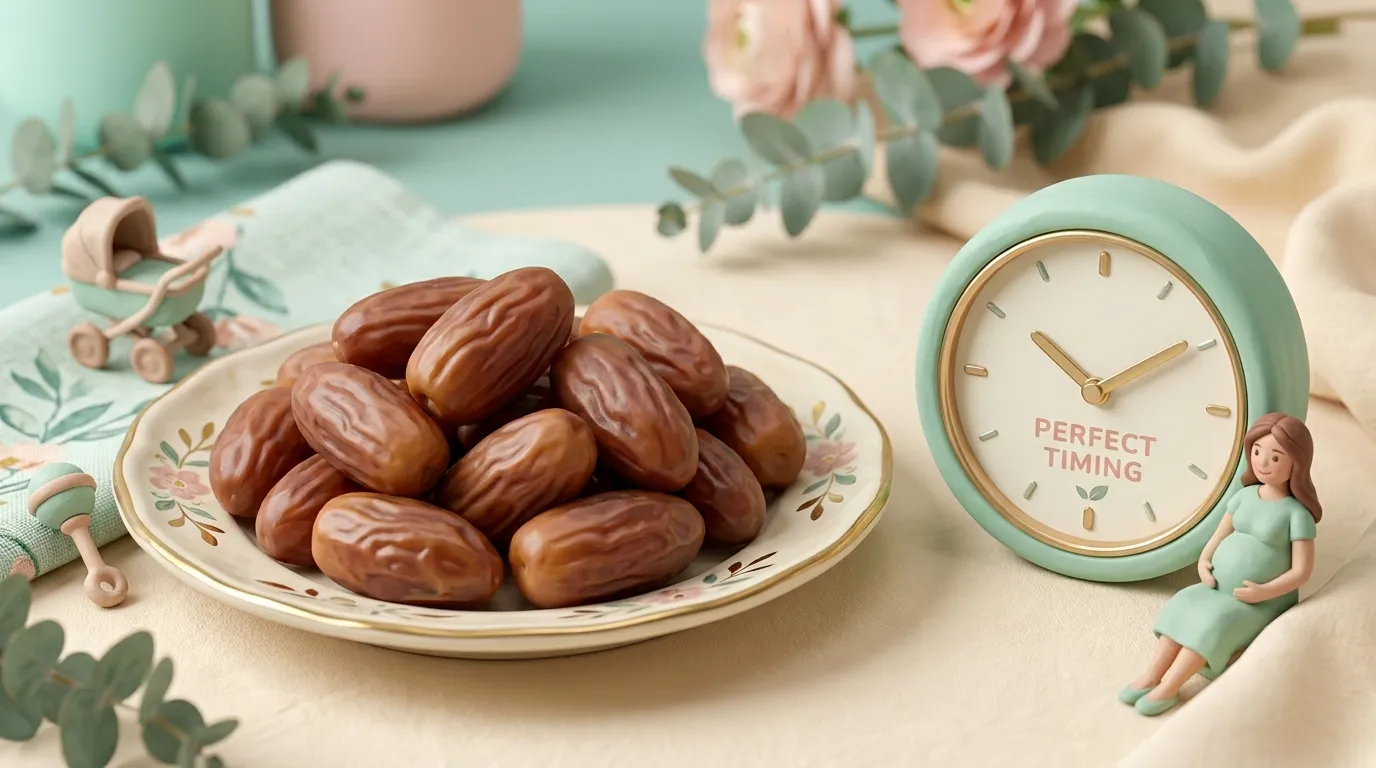
As you approach the final stretch of your gestation timeline, your thoughts naturally shift toward preparing your body for labor and delivery. Among the various traditional remedies and birth-prep trends circulating online, consuming real dates (Phoenix dactylifera) is one of the very few practices heavily backed by active clinical nutrition data. If you are look to minimize your time spent on the delivery bed, you are likely asking: when to start eating dates in pregnancy setups, and how does this fruit affect your body biologically?
The Scientific Timeline Verdict: Clinical obstetric studies tracking dates and pregnancy outcomes reveal that you should ideally learn when are you supposed to start eating dates in pregnancy routines at the start of your 36th week of gestation (late third trimester). Consuming them daily from this milestone onward has been proven to encourage natural cervical softening and decrease the rate of medical labor inductions.
The Clinical Benefits: Are Dates Good for Pregnancy and Delivery?
Many old-wives' tales promise an easy delivery, but tracking dates while pregnant carries tangible biochemical proof. Dates are loaded with heavy densities of saturated fatty acids, plant tannins, and natural forms of serotonin.
When processed by your digestive tract, these compounds interact with maternal oxytocin receptor sites. Oxytocin is the vital hormone responsible for generating uterine contractions during childbirth. By mimicking or preserving natural oxytocin efficiency, eating dates encourages your lower uterine segment to thin out and dilate smoothly. At Pregnancy Clarity, we evaluate this nutritional tool as an excellent, evidence-based asset for women planning low-intervention vaginal births.
Trimester Parameters: When Is It Safe to Start Eating Dates in Pregnancy?
Because this stone fruit can influence smooth muscle tissues, mapping your safe physical boundaries chronologically is essential before loading your daily breakfast plate.
1. When to Start Eating Dates in Pregnancy First Trimester & Second Trimester
Can you consume dates during early gestation? Yes, absolutely. If you are assessing whether when to start eating dates in pregnancy first trimester or second trimester windows are safe, they are perfectly fine as a general food choice.
During early phases, dates function as a nutrient-dense snack rich in potassium, iron, and dietary fiber. However, eating them during early trimesters will not induce early labor or ripen your cervix, because your uterine oxytocin receptors do not become highly sensitive to chemical signals until late in the third trimester.
2. The Third Trimester Labor Launching Target
If your primary clinical goal is tracking when to start eating dates in pregnancy for labor prep, your target milestone is **36 weeks pregnant**. At this phase, your body begins its natural nesting and effacement cycle. Introducing a steady, daily nutritional dose at this specific time provides sustained uterine support without risking early premature structural changes before your baby is fully carried to term.
Dosing Protocol: When to Start Eating Dates in Pregnancy and How Many?
To duplicate the positive outcomes observed in randomized clinical trials, your daily serving sizes matter significantly.
Answering when to start eating dates in pregnancy and how many are required comes down to the specific variety of date you purchase. If you choose smaller, standard **Deglet Noor dates**, aim for **6 dates per day**. If you prefer the massive, rich **Medjool dates**, consuming **3 to 4 dates daily** provides the equivalent nutritional mass used in clinical research.
Critical Gestational Diabetes Warning: Because dates carry an intensely concentrated natural sugar load, they can dramatically elevate your blood sugar levels. If you have been diagnosed with gestational diabetes or are currently preparing your morning nutrition rules for lab screenings, dates are strictly forbidden. To understand how sugars impact your diagnostic metrics, read our detailed core asset on what to eat for breakfast before a pregnancy glucose test safely.
Advanced Combinations: When to Start Eating Dates and Pineapple in Pregnancy
As the delivery date nears, many women evaluate natural stacking combinations to help move labor along. A frequent choice is checking when to start eating dates and pineapple in pregnancy cycles.
Fresh pineapple contains an active enzyme called **bromelain**, which helps break down collagen bonds inside tissue structures. Stacking fresh, raw pineapple alongside your daily date routine from week 37 onward can provide a safe, natural, dual-action approach to cervical softening. However, ensure you do not consume canned pineapple, as the pasteurization heating cycle completely destroys the delicate bromelain enzyme molecules.
Holistic Strategy: How Do I Induce Labor Naturally?
While consuming dates is an excellent preparatory step, learning how do i induce labor naturally or figuring out how to induce labour naturally at 38 weeks requires a multi-faceted approach.
Alongside your daily date intake, try implementing gentle pelvic lunges, bouncing on a rubber birth ball to encourage gravitational engagement, and performing nipple stimulation to trigger natural oxytocin releases. If you experience mild systemic health bugs during these late weeks, screen your over-the-counter medication choices rigorously. Avoid multi-symptom decongestants by validating whether sudafed is safe during pregnancy, or check our verified guidelines on utilizing robitussin during pregnancy for severe cold care.
Frequently Asked Questions: Scientific Date Tracking & Fetal Health
To address your urgent nutritional concerns and help you format the best third-trimester meal plan, the dietetics panel at Pregnancy Clarity has answered your top 10 questions:
1. When in pregnancy to start eating dates specifically for labor preparation?
You should begin your focused, daily date routine at the beginning of your 36th week of pregnancy. This timeline gives the natural plant compounds ample time to build up and interact with your uterine oxytocin receptor networks.
2. When is it safe to start eating dates in pregnancy as a general daily snack?
It is entirely safe to enjoy dates as an alternative sweet treat starting from your first trimester. They offer excellent micronutrients, potassium, and vital minerals, provided you consume them in moderate single-serving amounts.
3. What do official health bodies like the when to start eating dates in pregnancy nhs guidelines suggest?
Institutional UK frameworks like the NHS note that while clinical trials show promising indicators that date consumption shortens the first stage of labor and reduces the need for Pitocin, they should be evaluated as an optional dietary supplement rather than a guaranteed medical induction tool.
4. What do real mothers on when to start eating dates in pregnancy reddit boards report about delivery times?
Anecdotal forum logs show an overwhelming trend: women who consistently processed 3 to 4 Medjool dates daily from week 36 onward frequently report smoother cervical dilation, significantly shorter pushing windows, and fewer instances of passing their official due date milestones.
5. Can eating high quantities of dates cause sudden loose stools or diarrhea in the third trimester?
Yes. Dates contain very dense amounts of dietary fiber and natural sorbitol sugar. If your digestive tract isn't accustomed to it, eating 6 dates suddenly can cause sudden laxative reactions. To track if this matches early body moves, check out our baseline guide on whether diarrhea is a sign of pregnancy or simple gastric shifts.
6. When should i start to eat dates in pregnancy if I am carrying twins?
If you are carrying multiples, you are at a significantly higher clinical risk for early preterm delivery. Because dates promote cervical softening, you should avoid starting a heavy date-eating protocol without the explicit authorization of your maternal-fetal specialist.
7. Is it good to take dates along with fresh pineapple chunks at 38 weeks?
Yes. Stacking dates and pineapple together at 38 weeks is a highly popular approach to late-stage birth prep. The fatty acids in dates prime your oxytocin pathways, while the active bromelain enzymes in the pineapple support the structural breakdown of firm cervical fibers.
8. Can eating dates cause a miscarriage if consumed in the second trimester?
No. Dates are a whole food fruit and do not possess the physiological power to initiate contractions or cause a miscarriage during a healthy second trimester. They simply offer clean calories and natural iron compounds when eaten normally.
9. What happens if I fail to eat the exact amount of dates recommended each day?
Missing a day or eating fewer dates will not harm your body or disrupt your pregnancy timeline. The clinical parameters are designed around cumulative nutritional saturation, so simply resume your clean high-fiber choices the following morning.
10. Should I choose Medjool dates or Deglet Noor dates for optimal cervical ripening?
Both varieties provide identical therapeutic benefits because they share the same base biochemical compound traits. Choose the option that fits your taste preference, adjusting the numbers to account for Medjool's larger physical mass size.