
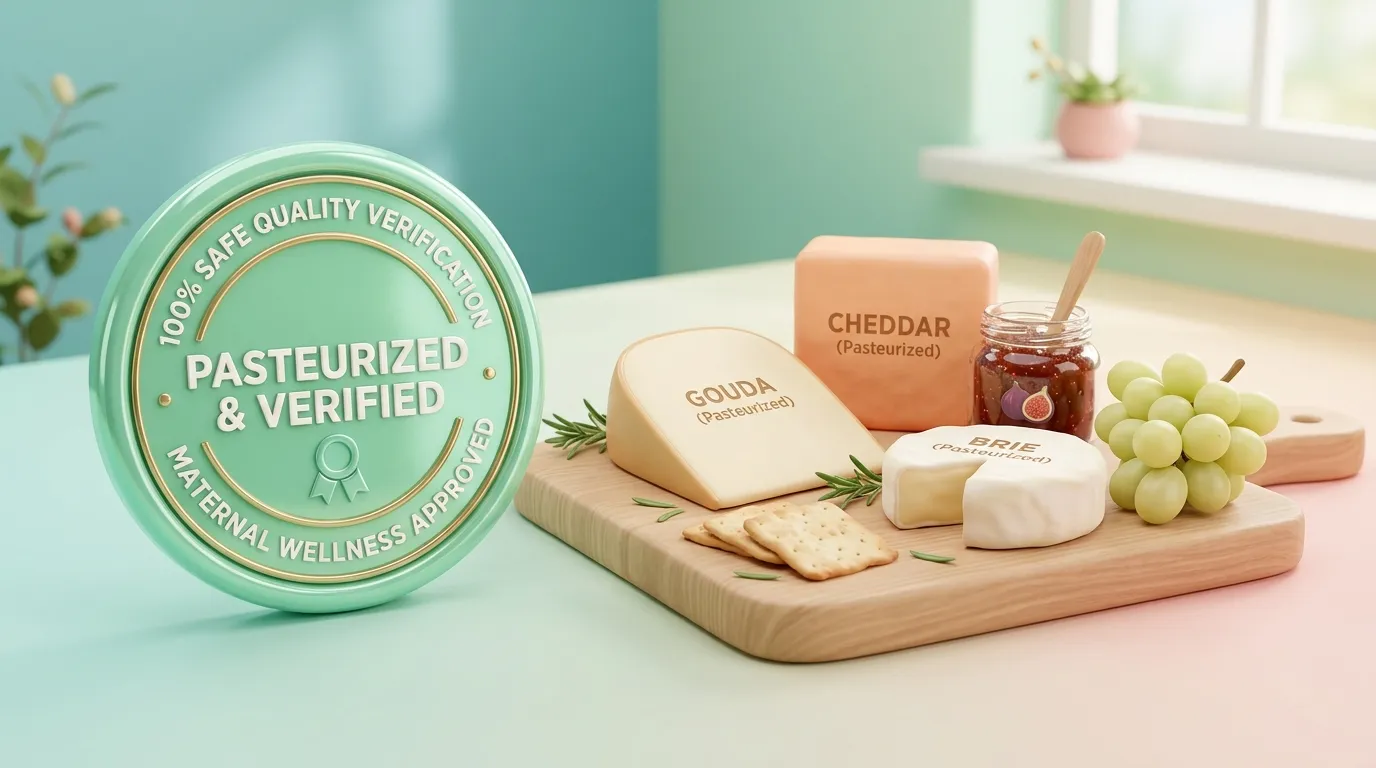
Cheese can provide protein, calcium, iodine, and other essential nutrients during pregnancy, complementing key supplements like folic acid and iron supplements. You do not need to avoid all cheese. The main food-safety question is whether the product could carry Listeria monocytogenes or another harmful germ. For broader dietary advice, explore our comprehensive healthy pregnancy guide.
Advice also differs slightly by country. The CDC in the United States lists several pasteurized cheeses as safer choices, particularly for managing balanced blood sugar in gestational diabetes. The NHS in the United Kingdom advises avoiding cold mould-ripened soft cheese and soft blue cheese during pregnancy unless it is cooked until steaming hot. Follow the advice of the health authority where you live, especially for imported or homemade products.
Which cheeses are usually safe during pregnancy?
The following options are generally lower-risk when they are commercially made with pasteurized milk, refrigerated correctly, within the use-by date, and not affected by a food recall:
- Cheddar and similar hard cheeses
- Parmesan and other hard grating cheeses
- Swiss, Gruyère, and Emmental
- Pasteurized mozzarella
- Pasteurized feta
- Pasteurized cottage cheese
- Pasteurized cream cheese
- Pasteurized string cheese
- Pasteurized processed cheese
- Pasteurized ricotta, when local guidance allows it and the product is stored safely
"Usually safe" does not mean that any food has zero risk. Pasteurized cheese can become contaminated after pasteurization. Buy it from a reliable source, follow recall notices, keep it cold, and use clean utensils.
A quick cheese safety chart
| Cheese type | Pregnancy approach | What to check |
|---|---|---|
| Hard cheese | Generally a safer choice, especially when pasteurized | Label, storage, use-by date, recalls |
| Pasteurized fresh cheese | Often acceptable when commercially made and handled safely | The word "pasteurized" and an intact cold chain |
| Mould-ripened soft cheese | Follow local guidance; NHS advice is to cook until steaming hot | Brie, Camembert, chèvre, similar rind |
| Soft blue cheese | Avoid cold or cook until steaming hot under NHS guidance | Gorgonzola, Roquefort, Danish blue |
| Raw-milk cheese | Avoid unless local pregnancy guidance clearly permits that product | "Unpasteurized," "raw milk," or unclear label |
| Homemade or informal-market soft cheese | Higher uncertainty; choose a verified commercial product | Milk source, sanitation, refrigeration, labeling |
Why Listeria matters during pregnancy
Listeria monocytogenes is a bacterium that can contaminate food and survive at refrigerator temperatures. The illness it causes is called listeriosis. A pregnant person may have mild symptoms, yet the infection can seriously affect the pregnancy or newborn.
Possible symptoms include fever, muscle aches, tiredness, nausea, vomiting, or diarrhea. Symptoms are not specific, so you cannot identify listeriosis by how you feel alone. If you develop fever or flu-like illness after eating a recalled or higher-risk food, contact a healthcare professional promptly and explain the exposure.
Do not assume that every stomach upset after cheese is listeriosis. Many illnesses cause similar symptoms. At the same time, pregnancy is not the right time to ignore fever or a confirmed recall.
Does pasteurized always mean safe?
Pasteurization greatly reduces germs in milk by heating it under controlled conditions. It is one of the most useful label checks, but it is not a promise that contamination can never occur. Cheese may become contaminated during production, packaging, cutting, or handling after the milk was pasteurized.
Moist, soft cheeses can support bacterial growth more readily than many dry, hard cheeses. CDC guidance highlights queso fresco-type cheeses as a concern because their moisture and acidity can support Listeria, and outbreaks have occurred even when pasteurized milk was used.
This is why safe handling and recall awareness matter alongside pasteurization. If a product is recalled, do not eat it just because its label says pasteurized.
Hard cheeses: cheddar, Parmesan, Gouda, and Swiss
Hard and lower-moisture cheeses are generally among the safer options. Examples include cheddar, Parmesan, Asiago, Swiss, Gruyère, and Emmental. CDC safer-choice guidance specifically includes pasteurized hard cheeses.
Gouda and provolone vary in age and moisture, so checking the label is still useful. Buy prepacked cheese from a reliable supplier, or make sure a deli uses clean equipment. Keep the product refrigerated and discard it if it smells unusual, has unexpected mould, or was left out beyond food-safety guidance.
Some official UK guidance permits certain hard cheeses even when made with unpasteurized milk because their lower moisture makes bacterial survival less likely. U.S. advice emphasizes pasteurized choices. For a simple rule that travels well, choose pasteurized hard cheese.
Fresh cheeses: mozzarella, feta, ricotta, and cottage cheese
Commercial mozzarella, feta, ricotta, cottage cheese, and cream cheese are often made with pasteurized milk. Confirm this on the ingredient label. Fresh cheese has more moisture, so refrigeration and the use-by date are especially important.
Do not leave fresh cheese at room temperature for long periods. Use a clean spoon rather than eating directly from a shared tub, and return it to the refrigerator promptly. Throw it away if the seal was damaged or storage history is uncertain.
For restaurant dishes, you can ask whether the cheese was pasteurized. If staff cannot confirm the source, choose a cooked dish or another ingredient.
Brie, Camembert, and soft goat cheese
Brie, Camembert, and mould-ripened chèvre have a soft interior and a characteristic rind. Pasteurization alone does not settle the question in every country's guidance. The NHS advises avoiding these cheeses cold during pregnancy and says they can be eaten when cooked until steaming hot all the way through.
Heating must reach the center; warming only the surface is not the same. A baked cheese should be steaming hot rather than merely softened. Follow cooking instructions and avoid cross-contamination from the packaging or utensils.
If your local public-health advice is stricter, follow it. Pregnancy food guidance is designed around local food production, regulation, and outbreak patterns.
Blue cheese during pregnancy
Soft blue-veined cheeses include Gorgonzola, Roquefort, and Danish blue. Under NHS guidance, these should not be eaten cold during pregnancy but can be cooked until steaming hot. Hard blue cheese such as Stilton is treated differently in UK guidance, but recommendations may vary elsewhere.
When you cannot confidently identify whether a blue cheese is hard or soft, use the safer option: skip it cold and choose a thoroughly cooked dish. A sauce should be hot throughout, not just have cheese stirred in after cooking.
Queso fresco, queso blanco, panela, and similar cheeses
Queso fresco-type cheeses deserve extra care. CDC guidance notes that these fresh, high-moisture cheeses have been linked to Listeria infections. Choose only products clearly labeled as made with pasteurized milk, from a reliable commercial source, and keep them refrigerated.
Avoid cheese made at home or sold without a clear label when you cannot verify the milk and production conditions. Pasteurized milk lowers risk, but clean manufacturing is also essential. For a lower-risk approach, CDC guidance suggests heating queso fresco-type cheese to 165°F, or until steaming hot.
Cheese at restaurants, salad bars, and delis
Restaurant cheese may be safe, but you often have less information about the label and cold chain. Ask whether soft cheese was made with pasteurized milk. For mould-ripened or blue cheese, choose a dish in which the cheese is cooked until steaming hot if that matches your local guidance.
At a salad bar, food may be handled by many people and sit chilled for varying lengths of time. A freshly prepared meal from a kitchen may be easier to assess. At a deli, sliced cheese can contact shared equipment, so some public-health guidance treats deli-sliced products more cautiously than sealed packs.
If you are uncertain, packaged pasteurized cheese that you open at home is a simple alternative.
How to read a cheese label
- Find the milk statement. Look for "made with pasteurized milk." "Cultured milk" does not automatically answer whether it was pasteurized.
- Identify the cheese style. Is it hard, fresh, mould-ripened, blue-veined, or queso fresco-type?
- Check the date. Do not use a product after its use-by date.
- Inspect the package. Avoid a swollen, leaking, damaged, or previously opened package with unknown storage.
- Check recall alerts. Follow your national or local food-safety agency.
- Follow storage directions. Refrigerator temperature and time after opening matter.
Safe storage and preparation
- Keep cheese refrigerated at the temperature stated on the package.
- Wash hands before preparing food.
- Use a clean knife and cutting surface.
- Prevent raw meat juices from contacting cheese or ready-to-eat food.
- Reseal or wrap opened cheese and note the opening date.
- Discard food left out too long under local food-safety rules.
- Cook higher-risk cheese until steaming hot when official advice says cooking makes it acceptable.
Nutrition: how cheese can fit into pregnancy
Cheese can contribute calcium and protein, but salt and saturated fat vary. Portions and the rest of your diet matter. Pair cheese with whole grains, vegetables, fruit, beans, or other foods that add fiber and variety.
If you have gestational diabetes, cheese may add protein to a meal or snack, but it does not make a high-carbohydrate meal automatically suitable. Follow the individual plan from your diabetes team. If you are preparing for screening, use the exact instructions from the clinic rather than a general internet menu; our guide explains breakfast before a pregnancy glucose test.
If you avoid dairy, ask a clinician or dietitian about calcium, iodine, vitamin D, and protein from other foods or supplements. Do not rely on cravings to diagnose a nutrient deficiency.
What if you already ate a higher-risk cheese?
Do not panic. Eating a food with a higher potential risk does not mean that it contained Listeria or that you will become ill. Check whether the product is part of a recall and keep the packaging if you may need its brand or lot number.
Contact a healthcare professional if the food was recalled or if you develop fever, muscle aches, marked tiredness, vomiting, diarrhea, or other concerning symptoms. Tell them that you are pregnant, what you ate, when you ate it, and whether anyone else became ill.
Do not start leftover antibiotics or try to test yourself at home. A clinician will decide whether evaluation is needed based on the exposure and symptoms.
Grated, sliced, frozen, and cooked cheese
Pre-grated and pre-sliced cheese can be convenient, but the same label and storage rules apply. Choose a sealed product made with pasteurized milk, refrigerate it promptly, and avoid a package that is damaged or past its use-by date. Shared deli equipment adds another handling step, so a sealed pack can be easier to assess.
Freezing does not reliably kill Listeria. It may preserve cheese, but it does not turn a higher-risk product into a pregnancy-safe one. Thaw frozen cheese in the refrigerator and use it according to the package directions.
Cooking can reduce risk when the entire cheese reaches the temperature named in official guidance. "Melted" is not always the same as "steaming hot." In a casserole, toastie, pizza, or sauce, make sure the food is hot throughout and avoid contaminating it again with an unclean utensil or cold topping.
Frequently asked questions
Can I eat pizza with mozzarella during pregnancy?
Commercial mozzarella is commonly pasteurized, and pizza is served cooked. Check the source when possible and make sure the food is properly heated and stored.
Is cream cheese safe during pregnancy?
Commercial cream cheese made from pasteurized milk is generally a safer choice. Keep it refrigerated, use a clean utensil, and follow the date after opening.
Can I eat Parmesan when pregnant?
Parmesan is a hard, low-moisture cheese and is generally considered a lower-risk option. Choosing a pasteurized, commercially packaged product is the simplest cautious approach.
Is pasteurized Brie safe when pregnant?
Guidance varies. The NHS advises that mould-ripened soft cheeses such as Brie should be cooked until steaming hot during pregnancy, even when pasteurized. Follow your local health authority.
Can cheese cause miscarriage?
Cheese itself does not cause miscarriage. The concern is infection from contaminated higher-risk foods. Listeriosis can harm a pregnancy, which is why pasteurization, cooking, refrigeration, and recalls matter.
Sources
Related reading: build the rest of a balanced plan with the healthy pregnancy guide.
- CDC: safer food choices for pregnant women
- CDC: preventing Listeria infection and safer cheese choices
- CDC: Listeria, soft cheese, raw milk, and queso fresco-type cheese
- NHS: foods to avoid during pregnancy
- NHS: listeriosis symptoms and higher-risk foods