
As a gynecologist who has spent years guiding women through the ups and downs of the third trimester, I often get asked about “labor shortcuts.” While there is no magic button to start delivery, nature has provided a few tools that actually have scientific backing. One of the most common questions in my clinic is: when should pregnant women eat dates to help with labor?
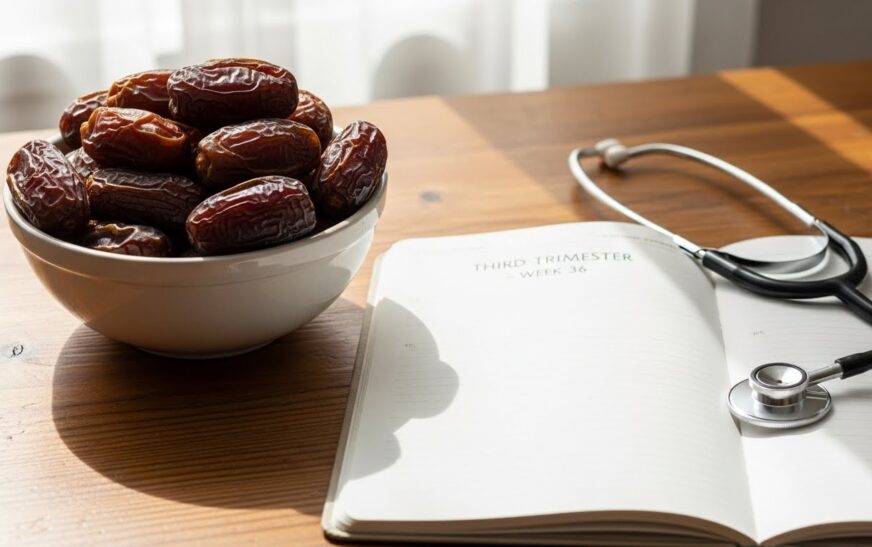
If you are looking for the short answer: clinical research suggests you should start eating 6 to 7 small dates (or 3 to 4 large Medjool dates) daily starting at 36 weeks of pregnancy. This timing aligns with the start of your ninth month, giving the nutrients enough time to interact with your body’s natural hormones before your due date.
The Science of Dates and Childbirth
It sounds almost too simple, eating a fruit to help with delivery, but as a doctor, I look at the biochemistry. Dates aren’t just sweet snacks; they contain compounds that mimic the effects of oxytocin, the hormone responsible for uterine contractions.
How Dates Prepare the Cervix (Cervical Ripening)
In the final weeks, your cervix needs to go from being a firm, closed “plug” to a soft, thin, and open gateway. This process is called cervical ripening. Studies have shown that women who consume dates in the final month often arrive at the hospital with a more “favorable” cervix. In medical terms, this means a higher Bishop Score, which is the system we use to predict how close you are to labor.
Boosting Natural Oxytocin for Stronger Contractions
Dates contain saturated and unsaturated fatty acids like oleic and linoleic acids. These help in the production of prostaglandins. If you’ve ever had a medical induction, you might know that doctors often use prostaglandin gels to soften the cervix. By eating dates, you are essentially providing your body with the raw materials to produce these substances naturally.
Does Eating Dates Shorten Labor Time?
One study published in the Journal of Obstetrics and Gynaecology found that women who ate dates had a significantly shorter “latent phase” of labor. This is the early, often exhausting part of labor where the cervix dilates from 0 to 4 centimeters. For many of my patients, shortening this phase means more energy left for the actual pushing stage.
Benefits of Dates in Pregnancy: More Than Just Labor
While most of the buzz is around dates for normal delivery, their nutritional profile is impressive throughout the entire pregnancy.
- Natural Energy Boost: The third trimester brings a specific kind of exhaustion. Dates are high in fructose, which provides a steady energy release rather than the “crash” you get from processed sweets.
- Preventing Pregnancy Constipation: With the growing baby pressing on your bowels and the iron in your prenatal vitamins, constipation is a common complaint. The high fiber content in dates is a natural remedy I always recommend before reaching for stool softeners.
- Iron-Rich Support: Anemia is a frequent hurdle in the late third trimester. Incorporating iron-rich foods helps maintain your hemoglobin levels, which is vital since some blood loss is expected during delivery.
If you are just starting your journey and are currently worried about morning sickness rather than labor prep, you might be asking is Zofran safe during pregnancy to help you keep food down. It’s always about finding that balance between medical support and nutritional health.
Practical Guide: How Many Dates Should You Eat Daily?
Precision matters when you’re using food as a form of “labor prep.”
The Recommended “Dose” The goal is roughly 70 to 80 grams of dates per day.
- Deglet Noor (Common dates): About 6 per day.
- Medjool Dates: These are much larger and meatier, so 3 or 4 is usually enough.
Why the 36-Week Mark? Starting at 36 weeks gestation allows the compounds to build up in your system. If you start too early, like in the first trimester, you won’t “trigger” labor (don’t worry, they are safe to eat early on!), but you also won’t get the specific cervical ripening benefits that peak in the final month.
For those who are still very early in their journey and just stumbled upon this guide, you might first want to check how soon can you take a pregnancy test to confirm your dates before planning your third-trimester snacks.
Choosing the Right Variety: Ajwa, Medjool, or Sukari?
Not all dates are created equal. In my experience, patients often ask if a specific type is “better.”
- Ajwa Dates: These are often called the “King of Dates.” They are smaller, darker, and have a unique history. In many cultures, especially in Islamic traditions, Ajwa dates in pregnancy are highly recommended for their high antioxidant content.
- Medjool Dates: These are the easiest to find in U.S. grocery stores like Costco or Whole Foods. They are incredibly sweet and have a caramel-like texture, making them perfect for smoothies.
- Zahidi Dates: If you find Medjool too sweet, Zahidi dates are firmer and have a lower sugar-to-fiber ratio, which can be better for steady blood sugar.
Important Precautions: Gestational Diabetes and Blood Sugar
This is the part where my “doctor hat” stays firmly on. While dates are a superfood, they are also “sugar bombs.”
If you have been diagnosed with gestational diabetes, you must be careful. Dates have a low Glycemic Index (GI), meaning they don’t spike blood sugar as fast as a candy bar, but they still contain a lot of carbohydrates.
My Clinical Advice for Diabetic Moms:
- Pair with Protein: Never eat dates alone. Eat them with a handful of walnuts, almonds, or a piece of cheese. The protein and fat slow down the absorption of sugar.
- Monitor Your Numbers: Check your blood sugar one hour after eating them to see how your body reacts.
- Limit the Count: You might need to reduce your intake to just 1 or 2 dates rather than the full 6.
Creative Ways to Add Dates to Your Pregnancy Diet
Eating six dates a day for four weeks can get boring. Here are some tricks I share with my patients to keep things interesting:
- The “Labor Prep” Smoothie: Blend 3 Medjool dates with a cup of almond milk, a tablespoon of almond butter, and a pinch of cinnamon. It tastes like a milkshake but is packed with potassium and magnesium.
- Stuffed Dates: Pit the dates and fill them with peanut butter or goat cheese. It’s a perfect savory-sweet snack.
- The Morning Oatmeal: Chop 2 dates and stir them into hot oats. The heat softens them until they almost melt into the porridge.
Common Questions from My Patients
Strictly speaking, dates do not induce labor in the way a medical sweep or Pitocin does. Instead, they make your body more “ready” for when labor happens on its own. They help the process move faster once it starts
If you truly can’t stand them, don’t force it. Stress is worse for labor than missing out on dates. You can try date syrup (in moderation) or look into other options like red raspberry leaf tea, which also helps tone the uterus.
Outside of the sugar content, the main side effect is loose stools due to the high fiber. If you find yourself getting bloated or having diarrhea, scale back the number you eat until your stomach adjusts.
Final Thoughts from the Clinic
Preparing for birth is as much a mental game as it is physical. Incorporating dates into your pregnancy nutrition at 36 weeks is a simple, evidence-based way to feel proactive about your delivery. It gives your body the nutrients it needs to handle the marathon of labor.
Remember to keep your healthcare provider in the loop, especially regarding your blood sugar levels. Every pregnancy is different, and while the data on dates is strong, your personal health profile always comes first.