
An unexpected shift in vaginal secretions is often one of the earliest physiological clues that conception has occurred. While many women search for classic systemic indicators—like morning sickness or basal body temperature spikes—subtle variations in cervical mucus frequently surface days before a home pregnancy test can register a positive result.
Understanding the exact differences between typical pre-menstrual fluids and early signs of pregnancy discharge helps clarify what is happening inside your reproductive tract during this highly transitional timeline.
In This Guide:
What Is Early Pregnancy Discharge (Leukorrhea)?
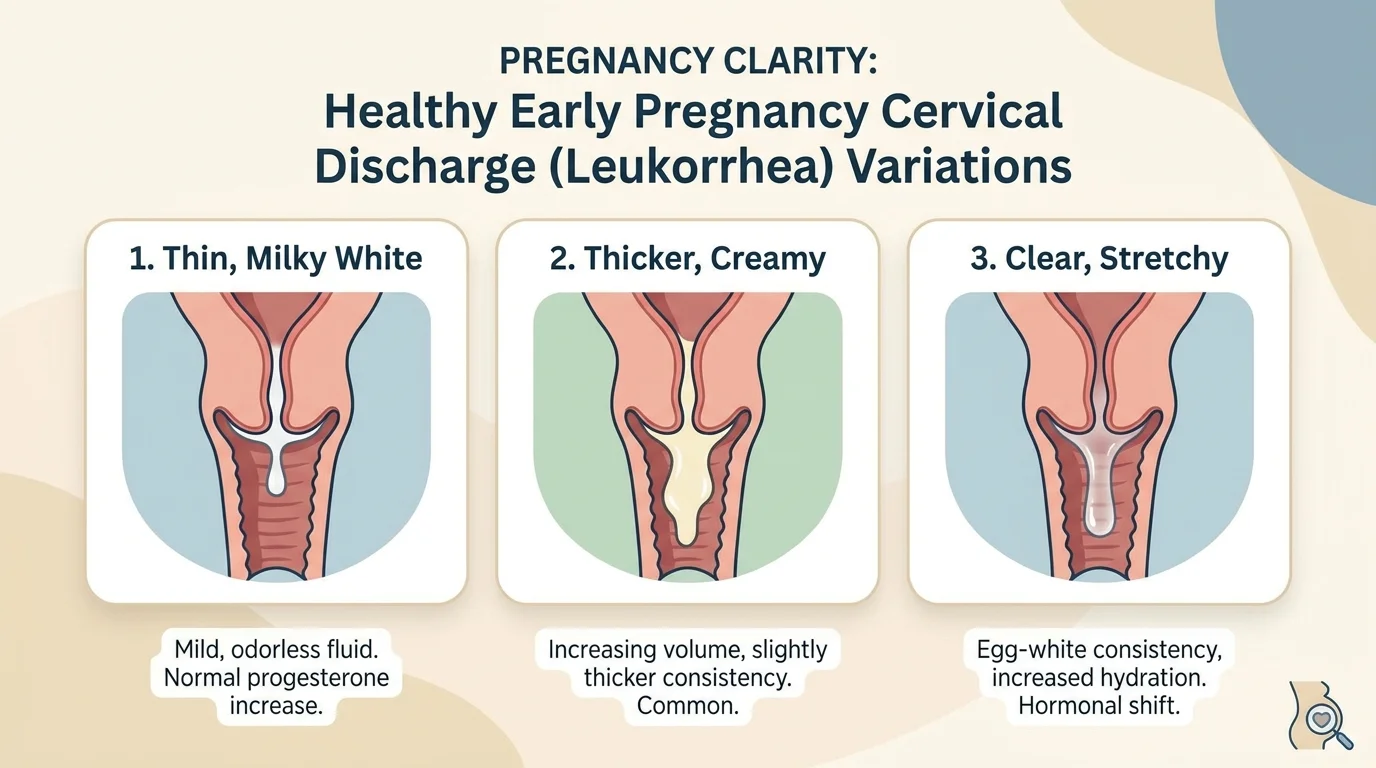
In clinical medicine, the daily increase in vaginal fluid during the early stages of gestation is known as leukorrhea. This fluid is a non-irritating, thin, milky white secretion that is either entirely odorless or carries a very faint, mild scent. Observing this increased discharge in early pregnancy is completely standard and signals that your body is responding accurately to embryonic development.
The Physiological Cause Behind Increased Fluid Production
The moment a fertilized egg attaches to the uterine lining, maternal hormone production shifts rapidly. A sudden surge in circulating estrogen levels stimulates vascular blood flow to the pelvic region and accelerates the metabolic activity of the cervical glands.
This biological reaction serves an essential protective purpose: the continuous upward movement of fluid naturally flushes out the vaginal canal, keeping the cervix clean to shield the developing embryo from ascending bacterial infections or environmental imbalances.
Discharge Before Period vs. Early Pregnancy: Key Differences
Differentiating between regular pre-menstrual fluids and a genuine discharge early pregnancy sign requires tracking subtle shifts in fluid volume, texture timeline, and duration.
During a typical menstrual cycle, cervical fluid decreases significantly after ovulation. As progesterone levels drop in the days leading up to your period, the mucus usually becomes thick, dry, sticky, or disappears altogether.
However, if conception is successful, estrogen and progesterone levels do not drop; they continue to scale upward. Instead of drying up, your vaginal secretions stay highly active. This consistent, increased discharge early pregnancy pattern remains fluid right up to, and past, the day your scheduled menstrual cycle was supposed to begin.
This biological response is part of a broader hormonal cascade. If you are tracking ovulation to confirm fertilization timelines, understanding when does pregnancy symptoms start will help you align your calendar with these physical shifts.
What Does Early Pregnancy Discharge Look Like?
Because baseline biology varies, the baseline appearance of cervical fluid can change from woman to woman. Recognizing how these textures look helps clarify what is happening during the critical weeks before a missed period.
Creamy Milky White Discharge
This is the classic presentation of leukorrhea. It features a smooth, lotion-like consistency that is either solid white or soft ivory. This white discharge early pregnancy fluid leaves a light, powdery residue on undergarments but remains completely free of clumps, surface irritation, or sharp odors.
Clear, Sticky, or Egg White Mucus
While raw egg white discharge is typically linked to high fertility windows during ovulation, observing an early pregnancy egg white discharge is also quite common. This thick, clear, gelatin-like fluid plays a role in creating the physical mucus plug—a biological barrier that seals the cervical canal to protect the uterine cavity throughout the pregnancy.
Watery Discharge ("Feels Like I Peed Myself")
A frequently discussed symptom among women tracking early cycles is a sudden watery discharge feels like i peed myself early pregnancy event. This thin, highly fluid discharge occurs because intense pelvic congestion causes regular mucosal secretions to thin out. As long as the fluid remains completely clear and is free of pelvic cramping, it is a normal response to increased vascular blood flow.
Decoding Atypical Colors: Brown, Pink, and Yellow Variants
Not every presentation of cervical mucus matches a translucent or white profile. Shifts into different color spectrums can be tied to benign physiological changes, or they can serve as early indicators that require professional medical attention.
Light Brown or Stringy Brown Discharge
Finding a brown discharge in early pregnancy can cause immediate worry, but it often consists of residual, older blood that took extra time to exit the uterus. This often appears as a light brown or stringy brown discharge early pregnancy fluid mixed directly with clear mucus. It can occur around gestational weeks three and four due to implantation dynamics or routine hormonal adaptations.
If you notice these subtle color shifts alongside other early physical changes, reading a detailed breakdown of how early can you get pregnancy symptoms can help put these developments into context.
Pinkish and Spotty Fluids
A pale pink or faint rosy discharge typically points to implantation bleeding. This happens when the blastocyst implants into the vascular uterine wall, causing a minor shedding of tissue. This pink discharge early pregnancy spotting is light, brief, and occurs a few days before your expected period timeline.
Yellow or Greenish Discharge
A distinct yellow discharge early pregnancy fluid or a greenish, frothy output is atypical. If the secretion has a sour smell or is accompanied by local swelling, it may indicate bacterial vaginosis (BV) or a yeast infection. These imbalances require prompt care from your healthcare provider to ensure a healthy reproductive tract during these vital early milestones.
Summary Matrix: Normal vs. Abnormal Early Signs
This diagnostic checklist provides a clear breakdown of normal physiological shifts versus indicators that require medical evaluation:
| Feature | Normal Presentation (Leukorrhea) | Atypical Presentation (Consult OB-GYN) |
|---|---|---|
| Color Hues | Milky white, translucent clear, soft cream, or light pink/rosy spotting. | Dark yellow, vivid gray, or deep greenish discharges. |
| Consistency | Thin, watery, smooth lotion-like, or slippery egg white mucus. | Thick, chunky, cottage cheese texture, or highly frothy foam. |
| Odor Profile | Mild, slightly sweet, or completely clean and odorless. | Strong, distinct fishy smell, or sour, pungent odors. |
| Sensations | Comfortable; no structural pelvic pain, burning, or itching. | Persistent external itching, burning during urination, or severe cramping. |
Frequently Asked Questions
Is an increase in vaginal discharge a reliable early sign of pregnancy?
An increase in fluid production is a common biological reaction, but it is not a standalone diagnostic proof. Missing your period followed by a laboratory urine or blood HCG test remains the medical protocol to confirm conception.
How early can changes in vaginal discharge begin?
Changes in cervical fluid volume can develop as early as one to two weeks after fertilization occurs. This timeline aligns with the week leading up to your missed menstrual cycle, driven by early estrogen adaptations.
What does typical leukorrhea look like once it dries on fabric?
When exposed to oxygen, normal milky leukorrhea typically dries into a light yellow, off-white, or powdery crust on clothing. This is common and should remain free from dense odor profiles or unusual textures.
Can a watery discharge feel like you suddenly peed yourself in early pregnancy?
Yes, the sudden increase in thin, clear fluid can cause a sensation that mimics minor urinary leakage. This occurs because increased vascular activity in the pelvis accelerates normal gland secretions.
Is a brown stringy discharge normal at 4 weeks pregnant?
Observing light brown or stringy brown discharge around week four is common. It usually represents older blood from implantation or minor cervical sensitivity clearing out naturally. If it develops into bright red blood or severe pain, contact your doctor.
How can I distinguish implantation spotting from a regular period?
Implantation spotting remains faint pink or dusky brown, lasts from a few hours to two days, and does not turn into a heavy, bright red flow with tissue clots. It also appears slightly ahead of your scheduled period window.
Should I use tampons if my early pregnancy discharge is heavy?
No, do not use internal tampons during pregnancy to minimize the risk of introducing external bacteria into the cervical area. Use breathable cotton panty liners and keep the skin clean and dry.
When should I contact my OB-GYN regarding early discharge?
Seek medical evaluation immediately if you notice bright red active bleeding, pass clots, experience intense, one-sided pelvic pain, or if the fluid develops a strong, fishy smell with persistent itching.
Does every woman experience increased leukorrhea before a missed period?
Not all women notice a significant increase in fluid volume. Some experience clear changes in fluid volume, while others see little change from their regular baseline. Both scenarios can be entirely normal.
Can early pregnancy discharge cause external skin itching?
Normal leukorrhea does not cause surface itching, burning, or redness. If you experience these symptoms, they may point to a yeast infection or bacterial shift, which are highly treatable by your healthcare provider.